What to see in Marrakech: top sights, neighbourhoods and local tips
What to see in Marrakech neighbourhood by neighbourhood, from morning to night: how long each place takes, what you can skip and which day trips to take from the city.
Published on · 12 min read
If it's your first time in Marrakech, the places you shouldn't leave out are Jemaa el Fna square, the souks, the Ben Youssef Madrasa, the Bahia Palace, the Saadian Tombs and the Majorelle Garden. With two full days you can see them all on foot. A third day lets you get out of the city: the Atlas, the Agafay desert or a hot-air balloon flight at sunrise.
Almost every trip we organise in the south starts or ends in Marrakech, so we're out and about in the city several times a month. What works best, from what we see with our travellers, is visiting by neighbourhood rather than working through a list: you can cross the medina on foot in little more than half an hour, but if you jump from one end to the other you lose the morning in the alleys. Below we describe it in the order we'd do it ourselves, with how long each place takes and what you can leave out if you're short of time. For background on the country there's our Morocco travel guide, and for quick facts, the Marrakech destination page.
How the Marrakech medina is laid out
Think of the medina as three zones. North of Jemaa el Fna are the souks, the Ben Youssef Madrasa and the small museums. In the centre, the square and the Koutoubia, which you can see from almost everywhere and which works as a compass. To the south is the kasbah, with the Saadian Tombs, the El Badi Palace, the Bahia Palace and the Mellah, the old Jewish quarter.
Outside the walls, to the north-west, are Gueliz, the modern French-era city, and the Majorelle Garden. Hivernage and the Menara lie to the west, and the Palmeraie to the north, out on the edge of town.
With that map in your head the plan is simple: on the first day, the north in the morning, the south in the afternoon and the square at dusk. On the second, what's outside the medina.
Day one morning in the north of the medina
Ben Youssef Madrasa
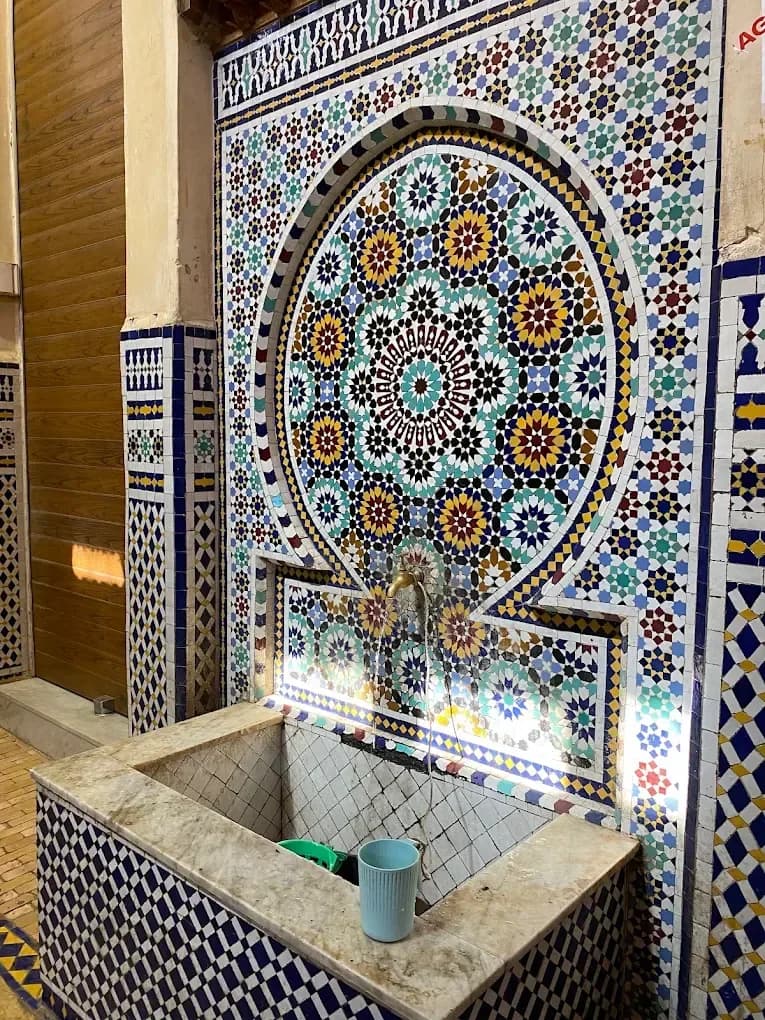
We start here because it's the most beautiful building in the city and because first thing in the morning the courtyard is almost empty. It was a Quranic school and reopened a few years ago after a long restoration. The pool in the courtyard, the carved stucco, the cedar wood and the zellige tiles take about 45 minutes to see properly; if you like photographing architecture, allow an hour. Go upstairs to see the cells where the students slept: it helps you grasp the real size of the building.
Marrakech Museum and the Almoravid Koubba
They're a few steps away. The Koubba is a small Almoravid dome, one of the few buildings from that period still standing, and you can see it in ten minutes. The Marrakech Museum is in an old palace with a large courtyard. If you're short of time, it's the first thing we'd tell you to drop: the Bahia tells a similar story and is better preserved.
The souks
From Ben Youssef you head down towards the square through the souks, and that walk takes between an hour and a half and two hours if you stop to look. The streets are organised by trade: dyers, blacksmiths, spices, lamps, babouche slippers, carpets. By mid-morning the craftsmen are already at work and it isn't yet as crowded as in the afternoon.
If you don't plan to buy, a "no, thank you" with a smile and walking on is nearly always enough. If you're interested in something, ask the price in two or three shops before negotiating; the first figure you hear is usually well above what you'll end up paying. We tell our travellers to decide beforehand how much they want to spend on a carpet and not budge from that figure. Buying a small souvenir, like a pair of babouches or a bag of spices, is a good way to practise haggling with little at stake.
Motorbikes come through very narrow streets. Walk on the right and, if you hear "balak", step aside: it means "watch out".
Midday by the Koutoubia
Koutoubia Mosque
Its minaret, about 77 metres tall, is the symbol of Marrakech. If you aren't Muslim you can't go inside the mosque, but the gardens around it are open and you can walk round them in twenty minutes. It's a good place to sit in the shade after the souks.
Where to eat
At midday we prefer to eat away from the square, in a medina restaurant with a terrace or at the riad itself. Order tanjia, the Marrakech dish: meat slow-cooked for hours in a clay pot. On Fridays many homes make couscous. For more ideas, see our guide to Moroccan food.
In summer, this is the time to go back to the riad. From eleven to five in July and August, walking around the medina is exhausting and no fun.
Day one afternoon in the kasbah and the Mellah
Bahia Palace
It was built by a grand vizier at the end of the 19th century: courtyards, gardens and rooms with painted wooden ceilings. It takes an hour to an hour and a quarter to go round. By mid-morning it fills with groups, so it works better first thing or mid-afternoon. If you're tired on the first day, leave it for the morning of the second and start there.
Saadian Tombs
They hold the mausoleums of the Saadian dynasty, and the Hall of Twelve Columns is what everyone comes to see. The site is small: 30 or 40 minutes is plenty. What makes the visit longer is the queue to look into that hall, which can be a quarter of an hour in high season. Be patient and don't settle for a photo from a distance.
El Badi Palace
Five minutes' walk away. Today it's in ruins, but the size of the courtyards and the empty pools is impressive. Go up onto the walls: you'll see the storks' nests and, in winter and spring, the snow-capped Atlas in the background. Allow between 45 minutes and an hour. If you have to choose between El Badi and the Bahia, go with the Bahia; if you have children with you, they usually prefer El Badi because there's room to run around.
The Mellah
The old Jewish quarter is right next to the Bahia. It has a synagogue you can visit, a large cemetery and a spice market that's calmer than the northern souks. An hour is enough to walk around with a guide or a map. Sellers are less pushy here, and many of our travellers say it's where they get the best sense of daily life in the medina.
Sunset and evening in Jemaa el Fna
The square through the day
In the morning Jemaa el Fna is half empty, with orange juice and date stalls and the odd snake charmer. Around five or six, depending on the season, the food stalls start to go up, and as the sun sets the Gnawa musicians, storytellers and thousands of people appear. Get there while it's still light to watch it change.
The terraces
Go up to one of the terraces around the square to watch the sunset from above. They usually ask you to order something, a tea or a soft drink. The best-known ones fill up early; if you want a good table, go up half an hour before sunset.
Eating at the stalls
Pick stalls with lots of local customers and a quick turnover, because the food is freshly made. Ask the price of each dish before you sit down and check whether the bread and olives they put on the table are charged. If you're feeling brave, try the snails in spiced broth.
Photos, henna and monkeys
If you photograph a musician, a water seller or a snake charmer, they'll ask you for a tip. That's normal; ask first and carry loose change. Watch out for women who grab your hand to do a henna tattoo without asking: when they finish, they ask for a lot of money. Pull your hand away firmly at the start. We advise against the monkeys on chains: the animal suffers and the photo ends up being expensive.
With your bag closed and in front of you, and your phone in an inside pocket, the square is safe at night. What you mostly see is petty theft where people are packed tightly together.
Day two outside the medina
Majorelle Garden
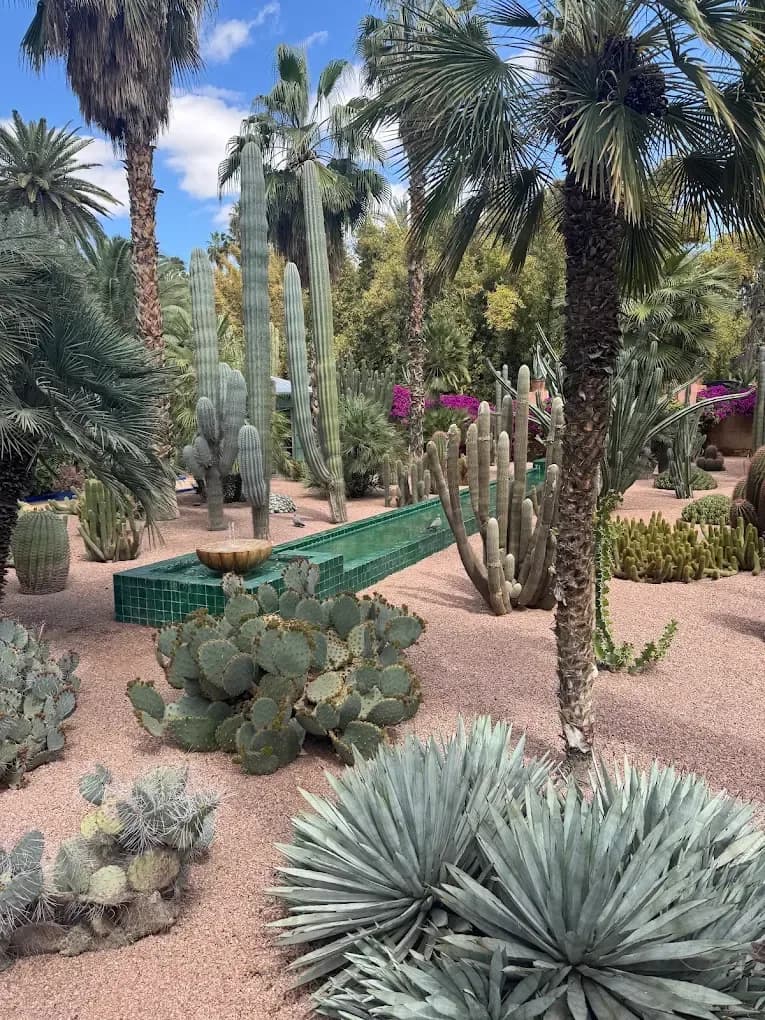
It was created by the painter Jacques Majorelle and later restored by Yves Saint Laurent and Pierre Bergé. The blue of the buildings, the cacti and the fountains take about 45 minutes; with the Berber Museum inside the garden and the Yves Saint Laurent Museum next door, allow two hours. It's the most crowded place in Marrakech. Buy your ticket in advance on the official website and go first thing; by mid-morning the garden paths look like a procession.
Gueliz
From Majorelle it's a fifteen-minute walk. Gueliz has cafés, art galleries, design shops and restaurants serving international food. There are no monuments to see, and if you're short of time you can skip it. For a couple who've been eating tagine for several days, dinner here makes a good change.
A hammam
Keep the afternoon of day two for a hammam. There are local neighbourhood baths, where you bring your own towel, black soap and scrubbing glove, and riad or spa hammams, which are more expensive and include a massage. Allow an hour and a half to two hours. After two days of dust and cobbled streets, it's what our travellers appreciate most.
Menara Gardens
A large olive grove with a pool and a pavilion, with the Atlas in the background on clear days. There isn't much more to see. We only recommend it if you're staying nearby, in Hivernage, or have a free afternoon with nothing else planned.
What you can skip if you're short of time
If you only have one day, stick to Ben Youssef, the souks, the Bahia, the Saadian Tombs and the square at sunset. Leave out the Marrakech Museum, the Menara and Gueliz. The Majorelle Garden is lovely, but it's outside the medina and with only one day it means taking a taxi and queuing; we'd leave it for another visit.
You don't need to see the square both by day and by night either. If you can only pick one moment, make it sunset.
How many days to spend in Marrakech
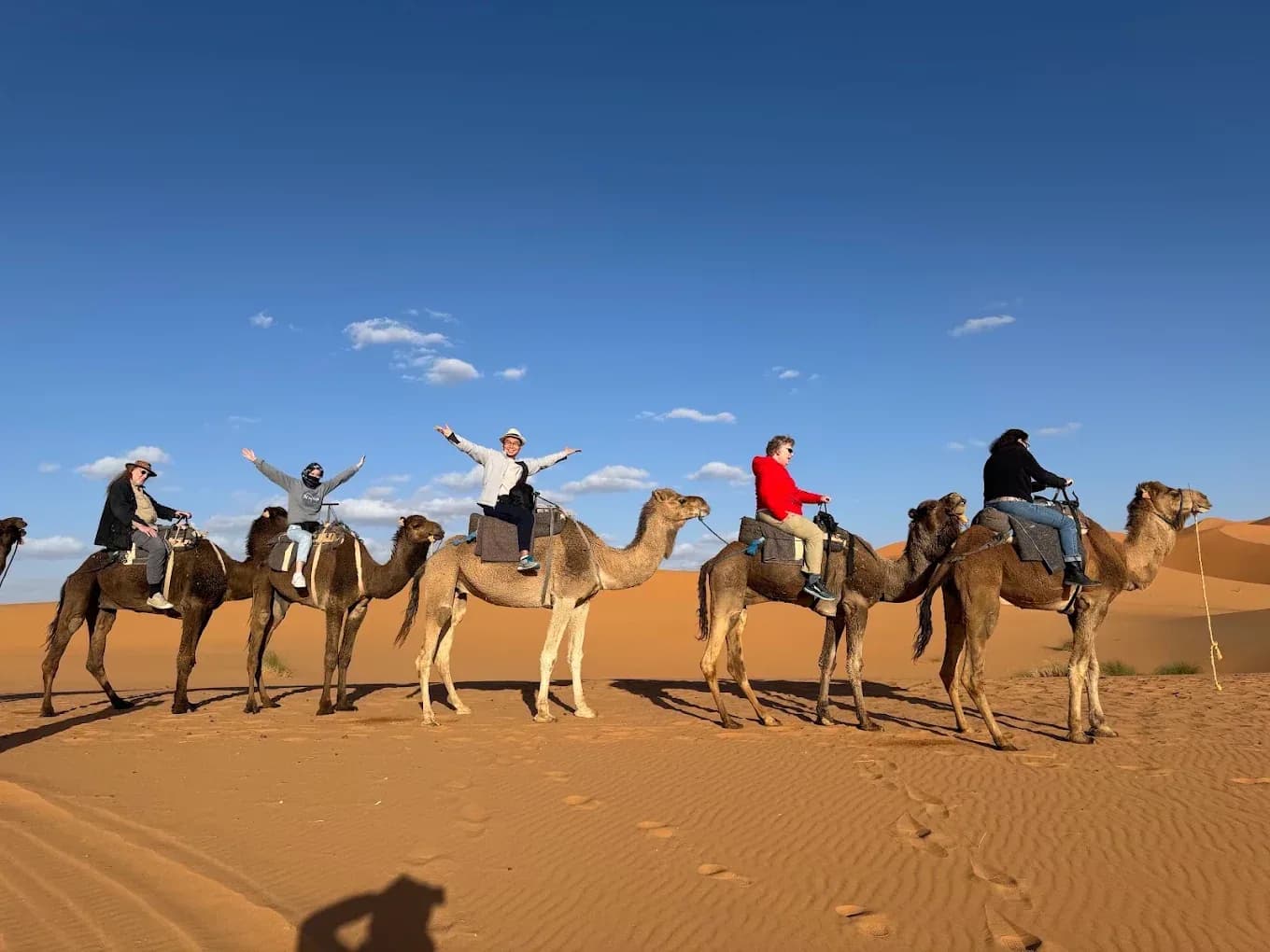
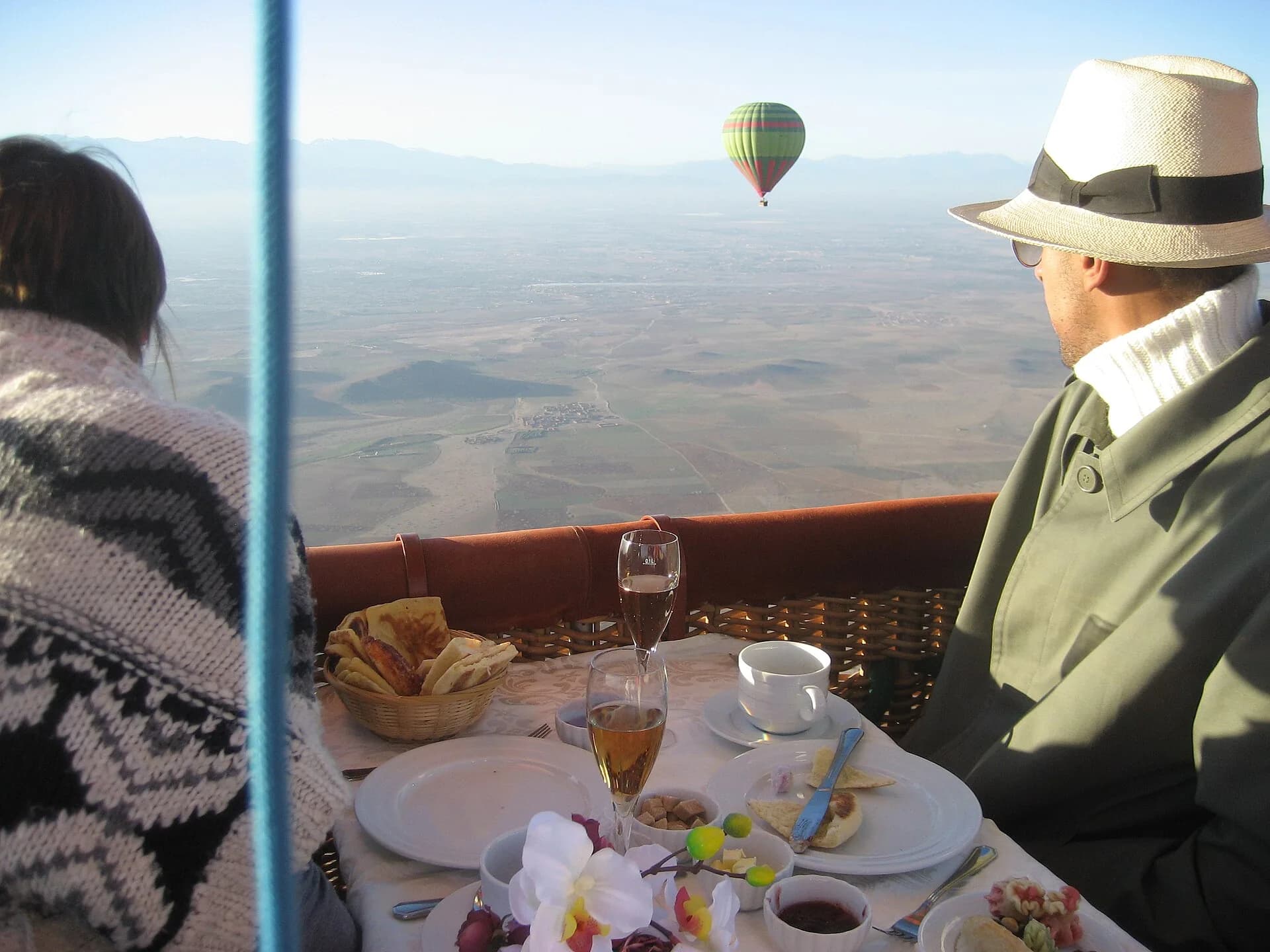
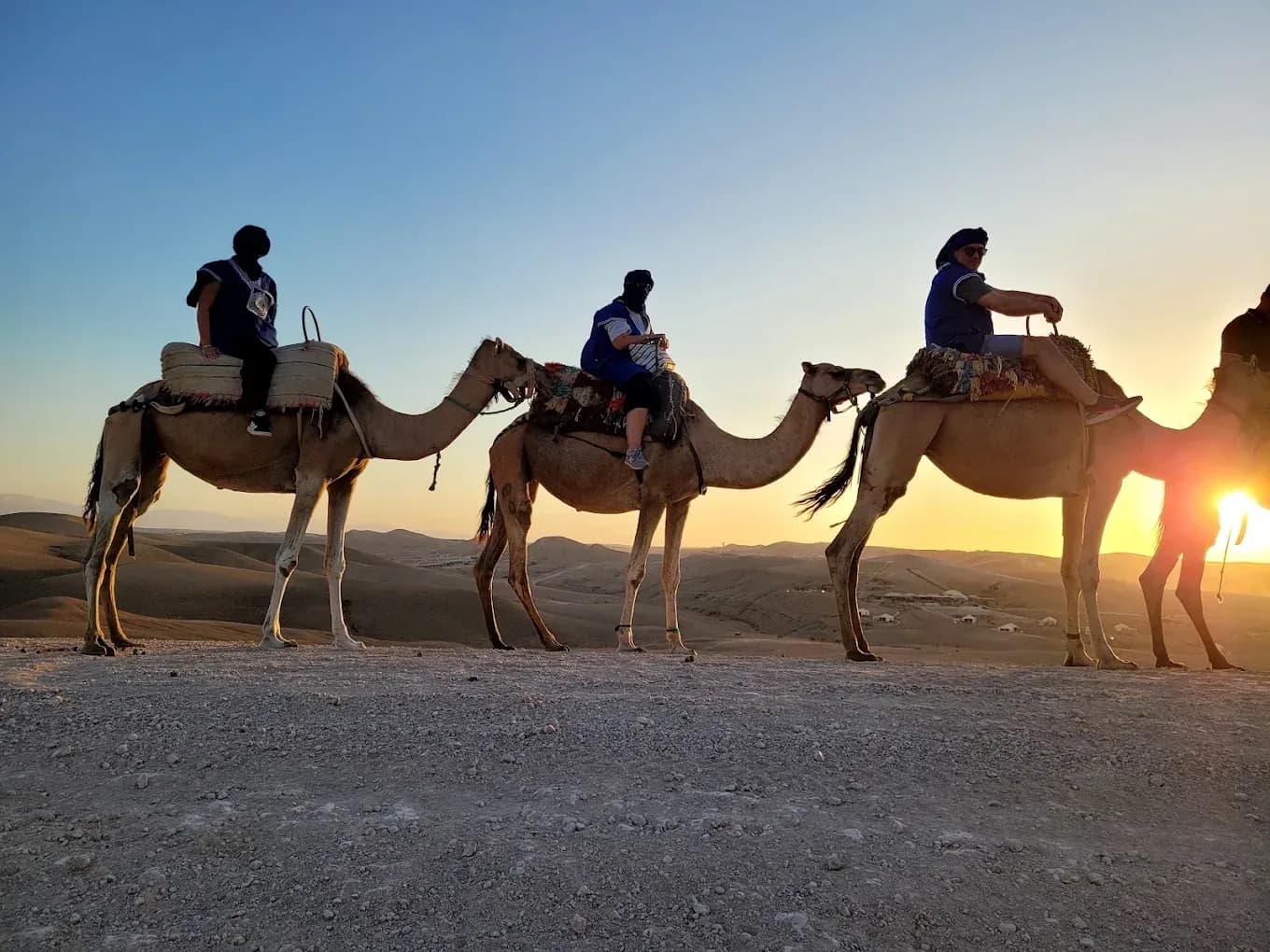
For a couple on their first visit, we recommend three nights: two days in the city like the ones above and a third outside it. The outings we're asked for most are the hot-air balloon flight at sunrise, which lasts about 45 minutes in the air, and the dinner under the stars in the Agafay desert, about 40 kilometres from the city. Agafay is a stony desert with no dunes, but in one afternoon you get a sunset, a camel ride and dinner.
For a family with children, cut down the hours in the medina and build in more breaks at the riad. Children don't cope well with the souks in the late afternoon, with the noise and the motorbikes. A morning in the Ourika Valley and the Atlas, an hour to an hour and a half by car, usually goes down better than another palace.
Solo travellers get around Marrakech fine, but on the first day we recommend an official guide for half a day. They get you oriented, keep the fake guides off your back and leave you the afternoon free to go back on your own to what you liked most.
If you have five days, swap the balloon for a day on the coast: the Essaouira day trip is about two and a half hours on the road each way, through argan trees. And if your trip is longer, Marrakech is the natural gateway to the Sahara. Our 3-day Marrakech to Merzouga tour passes through Aït Ben Haddou, the Dades Valley and the Todra Gorge before you sleep in the dunes. To combine several cities, have a look at our Morocco in 7 days itinerary.
Where to stay in Marrakech
A riad is a traditional house with an inner courtyard, nearly always converted into a small hotel. Staying in one puts you a few minutes' walk from everything and gives you a quiet place to go back to at midday. Many are down alleys where cars can't go; the staff come out to meet you with a trolley for your bags. Ask the riad to send you the exact location and, if you're arriving at night, for someone to wait for you where the taxi drops you off.
Riads near the square are practical but noisy at night. Those in the kasbah area or in the north, near Ben Youssef, tend to be quieter.
If you prefer hotels with a big pool and a garden, Hivernage and the Palmeraie have upmarket options, and they fit very well into a luxury tour or a honeymoon.
Getting around and what to avoid in Marrakech
Taxis and transfers
You get around the medina on foot. To go to Majorelle or Gueliz use the small taxis, the petits taxis, and agree the price or ask for the meter to be switched on before you get in. If you travel with us on a private tour, the driver handles transfers between the airport, the riad and the day trips.
Fake guides and detours
People will tell you "that street is closed" or "today is the last day of the tanners' fair". It's the oldest trick in the city and it always ends in a shop or a request for money. Smile, say thank you and carry on your way. An accredited official guide saves you these arguments.
Money
Carry cash in dirhams for the souks, taxis, tips and the stalls on the square; many places in the medina don't take cards. There are cash machines on Avenue Mohammed V and around the square. There are more details in our Morocco practical information.
Clothing and respect
Marrakech is used to tourism, but in the medina we recommend clothes that cover shoulders and knees. Don't photograph people without asking, especially older women. More pointers in our article on Morocco customs and etiquette.
Safety
For anyone who uses common sense, Marrakech is a safe city. The usual problems are petty theft and inflated prices. We explain this in more detail in is it safe to travel to Morocco?.
When to go to Marrakech
Spring, from March to May, and autumn, from September to November, are the best months for walking the medina. In winter the days are sunny and cool, but the nights are cold and some riads are poorly heated; ask about heating before you book. In summer the midday heat is intense and it's best to reorganise the day around a siesta. You'll find the month-by-month temperatures in Marrakech weather, and the picture for the whole country in the best time to visit Morocco.
Plan your visit to Marrakech
We can book you a well-located riad, an official guide for your first morning and the day trips that fit your days, from a weekend in the city to a full route around the country. Write to us from the contact page telling us how many nights you have, or browse all our Morocco tours.
Frequently asked questions
How many days do I need to see Marrakech?
Two full days are enough for the medina, the palaces in the south, the square and the Majorelle Garden without rushing. With three or four you can add a trip to the Atlas, an afternoon in Agafay or the balloon at sunrise. If you're carrying on to Merzouga, allow at least three more days just to get to the desert and back.
Is it easy to get lost in the Marrakech medina?
Yes, especially in the northern souks, where the alleys look very alike. Download an offline map before leaving the riad and use the Koutoubia and the square as landmarks. If someone offers to walk you somewhere without being asked, say thank you and ask in a shop or ask a family instead.
Is it better to stay inside or outside the medina?
On a first visit we prefer a riad inside the medina, because you can walk to almost everything and go back to rest at midday. Gueliz and Hivernage have conventional hotels and cars can reach the door, which is handy with small children or heavy luggage. The Palmeraie suits people looking for a garden, a big pool and silence.
Can you visit Marrakech in summer?
You can, but in July and August midday often goes above 40 °C. Do your sightseeing first thing and late in the afternoon, and leave the middle of the day for the riad or the pool. Drink water even when you aren't thirsty and wear a hat. Spring and autumn are much more pleasant for walking.