Morocco customs and etiquette: a guide to travelling respectfully
The etiquette mistakes we see every season in Morocco and how to avoid them: clothing, photos, haggling, tipping, mosques and Ramadan, explained by a local agency.
Published on · 10 min read
In Morocco, travelling respectfully comes down to a few rules: clothes that cover shoulders and knees in the medinas, asking permission before photographing someone, haggling with good humour, carrying coins for small tips and not eating or drinking in the street during the day in Ramadan. Moroccans are very hospitable and notice any gesture of respect.
We organise trips for Spanish speakers from many countries, and every season we see the same slip-ups come round again. None of them is serious, but almost all can be avoided by knowing a couple of things before you land. Here are the mistakes we see most, roughly in order of how often they happen, and what we tell our travellers so they don't make them. For general background on the country, see our Morocco travel guide.
Clothing mistakes
The most common mistake is dressing for Marrakech as if it were a beach town: very short shorts, vest tops, short dresses. No rule forbids it for visitors, and in Marrakech nobody will say anything to you. But in the medina you'll notice people looking, and in Fez, Chefchaouen or the villages of the south you'll feel out of place.
Our advice applies to women and men alike: shoulders and knees covered in the medinas, the countryside and religious sites. Loose cotton or linen clothing also happens to be the coolest in the heat. A large scarf solves a lot of situations: it covers your shoulders if you go into somewhere, protects you from sun and sand in the desert and works for the Hassan II Mosque.
The opposite mistake exists too. Some women arrive nervous and cover themselves completely, hair included, in forty-degree heat. There's no need. Moroccan women in the cities dress in many different ways, with and without a headscarf, and nobody asks a foreign woman to cover her head outside a mosque.
At the hotel pool and on the beaches of Agadir or Essaouira, swimwear is normal, bikinis included. What people don't do is walk along the seafront or through the centre dressed like that.
Marrakech, Casablanca and Agadir are the most relaxed cities in this respect. Fez, Chefchaouen and the villages of the Atlas and the south are the most conservative. If you're unsure what to pack, have a look at what to pack for Morocco.
Photography mistakes
Morocco is very photogenic, and that's exactly why so many mistakes happen with the camera. The main one is photographing people without asking, especially women, children and older people. In the countryside many people don't want to appear in photos, for religious reasons or simply because they don't like it. A gesture with the camera and a smile is enough to ask, and if the answer is no, you lower the camera without insisting.
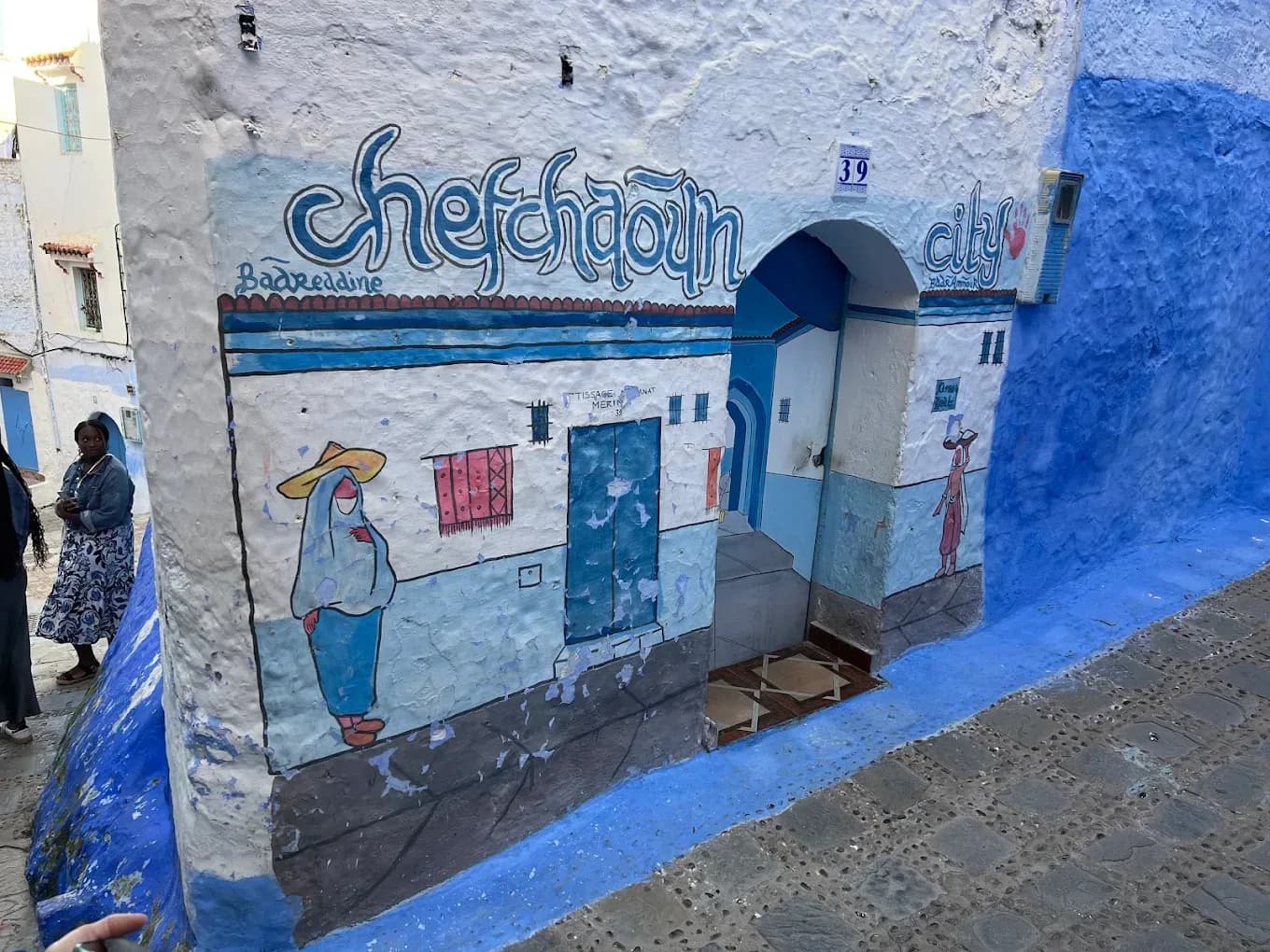
In Jemaa el Fna the snake charmers, water sellers, musicians and men with monkeys expect a tip if you photograph them, even from a distance. It's their job. If you don't want to pay, don't take the photo: arguing afterwards is the worst option. The same goes for some people who pose in Chefchaouen or by the painted doors of the medina.
Another lesser-known slip: photographing military buildings, police stations or the guarded entrances of the Royal Palace. Don't do it, even if the gate is beautiful. And if you're thinking of bringing a drone, find out first: their use is tightly regulated, needs authorisation and customs may hold it. Always check official sources before you travel.
When photography is the focus of the trip, a different pace makes sense, with stops at the right time of day for the light. That's what our photography tours are designed for.
Haggling mistakes in the souks
In souks and markets, the price is negotiated. In supermarkets, pharmacies, petrol stations and shops with marked prices, it isn't. What we see every season are four mistakes that keep repeating.
The first is asking prices for the sake of it. In the souk, asking how much something costs opens a negotiation, and the seller will take it seriously. If you're only looking, just look.
The second is haggling tensely, as if you were being cheated. Here it's a conversation, sometimes a long one, with tea along the way. Offer a figure well below the first price, go up slowly and keep your sense of humour. If you can't reach an agreement, say "la, shukran" (no, thank you), smile and keep walking. Sometimes the seller will call you back with a better price before you reach the corner.
The third is agreeing a price and then backing out. That does annoy people. If you say yes, you buy.
The fourth is feeling obliged. Being shown the whole shop or offered tea doesn't commit you to anything. Carpet shops and the exit from the Fez tanneries are where you'll feel the most pressure. We explain this in what to see in Fez and what to see in Marrakech.
A tip for anyone short on time: don't leave your shopping for the last afternoon. Haggling well takes a while, and when you're in a hurry you always pay more.
Tipping mistakes
Tipping is very widespread in Morocco and, for many people, an important part of what they earn. The typical mistake isn't giving too little but having nothing to give: arriving with only large notes and finding yourself without coins for the riad porter or the parking attendant. When you arrive, change some money and keep small notes and dirham coins in a separate pocket.
As a guide, these are the situations where people usually give something:
- in restaurants, around ten per cent if service isn't included, and in cafés, rounding up;
- the porter or riad staff who carry your luggage up, a few coins;
- the informal parking attendant, whom you'll see on almost every street with cars;
- the performers in Jemaa el Fna if you photograph them;
- the person who cleans some public toilets;
- the local guide and the driver on a multi-day tour, at the end of the trip.
With drivers, another frequent mistake is tipping every day. There's no need. You give it at the end, in an envelope or in person, and the amount depends on how happy you were. Nobody should ask you for it, and if someone pushes for it rudely, let us know. We talk about daily budgets in how much a trip to Morocco costs.
Mistakes at mosques and religious sites
Every year someone tries to walk into the Koutoubia in Marrakech or the Qarawiyyin in Fez and gets an unpleasant surprise at the door. In Morocco, as a general rule, non-Muslims can't enter mosques that are in use. It isn't aimed at travellers, it's the rule in the country.
The well-known exception is the Hassan II Mosque in Casablanca, one of the largest in the world, with guided visits for non-Muslims outside prayer times. They ask for modest clothing, a headscarf for women and that you take your shoes off inside. There's more information in the Casablanca guide.
You can also visit old madrasas, the Quranic schools, such as Ben Youssef in Marrakech or Bou Inania and Al Attarine in Fez, which are open to everyone. Check opening times and conditions before you go, because they change.
Near mosques and shrines, avoid peering through the door with your camera, talking loudly or stopping in the middle of the way at prayer time. And on Fridays around midday bear in mind that some shops in the medina close for a while.
Mistakes during Ramadan
Ramadan is the month of fasting: from dawn until sunset, Muslims don't eat, drink or smoke. Its dates change every year because they follow the lunar calendar. According to astronomical calculations, Ramadan in 2027 would begin around 8 February and end around 9 or 10 March, but in Morocco the date is announced by the Ministry of Habous and Islamic Affairs after the moon is sighted, and it can shift by a day. Always check official sources before you travel.
The most frequent mistake is eating, drinking or smoking in the street during the day. As a visitor you don't have to fast, and nobody will demand it of you, but doing it in front of people who have gone hours without a sip of water is seen as disrespectful. Drink in the car, at the riad or in a restaurant.
The second mistake is planning the day as if it were any other month. Outside tourist areas many cafés and restaurants close during the day. Hotels and riads keep serving. Shops and some services open later and close before nightfall, and in the hour before the fast is broken the streets suddenly empty. On a desert tour we organise things so there's always somewhere to stop and eat, but it's worth knowing.
The third is staying in the hotel in the evening. After iftar, the meal that breaks the fast, the streets fill with people, every pastry shop has sweets such as chebakia and the atmosphere is very festive. If someone invites you to share iftar, accept: it's one of the best meals you can have in Morocco. We tell you what's eaten in Moroccan food.
Everyday manners mistakes
Small things make a big difference to how you're received. Greeting people with "salam aleikum" (the reply is "aleikum salam") opens a lot of doors. "Shukran" is thank you, and you'll hear "inshallah", God willing, all the time, including when someone isn't sure about something. French is widely spoken, and in the north, Spanish.
Between men, shaking hands is normal. If you're a man, wait for a Moroccan woman to offer her hand before you offer yours; if she doesn't, a nod of the head is enough. Use your right hand for giving and receiving things, and for eating.
If you go into a home and see shoes at the door, take yours off. If you're offered tea, accepting at least one glass is a good gesture, although declining politely doesn't cause offence.
Couples are sometimes surprised by this: holding hands is fine, but kissing in the street is frowned upon. On a honeymoon, save the affection for the riad or the camp.
With families, something happens that makes some parents uneasy: here it's normal for people to be affectionate with children, touch their hair or give them a sweet. It's a sign of warmth. If your child doesn't like it, just say so with a smile.
Religion, the monarchy and politics are subjects best handled with care, especially with people you've just met.
Alcohol is served in hotels and licensed restaurants. What people don't do is drink in the street.
Mistakes with fake guides
We see this one mostly on the first day in Fez or Marrakech. Someone very friendly tells you that street is closed, that the tannery is only open today or that they'll walk you to the square. At the end of the walk they ask you for money or leave you in a friend's shop. Politely turn down any help you didn't ask for and carry on with your map. If you get lost, ask in a shop or ask a family. We explain this in is it safe to travel to Morocco?.
What changes depending on who's travelling
A woman travelling alone will get more comments than a couple, especially in the medinas. They don't usually go beyond words, and what works best is not replying and walking on with a confident stride. Dressing modestly helps, but doesn't stop it completely.
A family with children will get less pressure from sellers and more smiles. The biggest problem is usually the heat and the pace, not the customs.
People with little time tend to want to see everything in two days, and that's when they most often fall into rushed haggling or fake guides. A local guide for the first morning in the medina saves you many of these mistakes.
Travelling with someone who knows the country
With a local guide or a Spanish-speaking driver, most of these situations sort themselves out: they tell you when to haggle, how much to leave and how to behave in each place, and get you out of a shop if they see things dragging on. On our private tours the vehicle and the Spanish-speaking driver are just for you and your group, and most of our multi-day cultural tours include a local guide in Fez or Marrakech. If you have a specific question before you come, write to us through contact and we'll get back to you.
Frequently asked questions
Do women have to cover their hair in Morocco?
No. No female traveller has to cover her head to walk around, whether in Marrakech, Fez or the villages. A headscarf is only requested to enter the Hassan II Mosque in Casablanca. What we do advise is clothing that covers shoulders and knees in the medinas and the countryside, and carrying a light scarf in your bag because it comes in handy for everything.
How much should you tip in Morocco?
In restaurants, if service isn't included, people usually leave around ten per cent. For porters, parking attendants or someone who helps you with directions, a few coins are enough. The guide and driver on a multi-day tour get a tip at the end, depending on how happy you were. It is never compulsory.
Is it a good idea to travel to Morocco during Ramadan?
Yes, if you know what to expect. Monuments and tours run as normal, and hotels and riads keep serving food to travellers. During the day some cafés are closed and the pace slows, especially in the afternoon. The evenings, after the fast is broken, are very lively. We only ask that you don't eat or smoke in the street while people are fasting.
Can I go inside mosques in Morocco?
As a general rule, if you aren't Muslim you can't enter mosques that are in use. The well-known exception is the Hassan II Mosque in Casablanca, which runs guided visits outside prayer times. The old madrasas, such as Ben Youssef in Marrakech or Bou Inania in Fez, are open to everyone. Check opening times before you go, because they change.