Ramadan in Morocco: what changes for travellers
During Ramadan hotels, riads and tours keep running, but opening hours, food and the mood on the street change. What to expect, how to behave and the expected dates for 2027.
Published on · 8 min read
You can travel to Morocco during Ramadan without any problem. Hotels, riads, desert camps and restaurants aimed at tourists run as normal, and you don't have to fast. What changes is the rhythm of the country: days are slower and a little shorter, the streets empty just before sunset and the nights fill with people.
We welcome travellers every year during Ramadan, and almost all of them worry about the same things before they arrive: whether they'll be able to eat, whether things will be closed and whether they'll bother anyone. Let's take it step by step.
What Ramadan is and when it falls
Ramadan is the ninth month of the Muslim calendar. During those 29 or 30 days, adult Muslims who are able to do so don't eat, don't drink, not even water, and don't smoke from dawn until sunset. In Morocco, where the great majority of the population is Muslim, almost everyone observes it, and eating in public during the day is frowned upon among Moroccans themselves.
The Muslim calendar is lunar, which is why Ramadan moves about ten or eleven days earlier each year compared with the calendar used in Spain or Mexico. In 2027 it is expected to begin around 8 February and end around 9 March, according to astronomical forecasts. The exact date depends on the new moon being sighted and is officially announced the evening before. Always check official sources before you travel.
The clock change
In recent years Morocco has put its official clock back an hour during Ramadan and forward again when it ends. The change is announced only a few weeks in advance. If your flight, train or excursion falls near those dates, check the local time and confirm with whoever is picking you up. More than once we've had a traveller arrive at the airport an hour early because their phone didn't update.
How an ordinary day changes
Mornings start later. People have gone to bed late and eaten before dawn, so until mid-morning the medina streets are quiet. Offices, banks and many shops open with reduced hours.
At midday, most neighbourhood cafés are closed or have their chairs stacked away. Street food stalls aren't selling. This is what independent travellers notice most: in a small town it can be hard to find somewhere to eat. In Marrakech, Fez or Casablanca there are restaurants for tourists that stay open, and you can always fall back on your hotel.
The afternoon is shopping time. From three or four o'clock, the markets fill with people buying bread, dates, milk and sweets. The traffic gets edgy: everyone wants to get home in time. It is the worst time to find a taxi.
And then, suddenly, silence. When the sunset call to prayer sounds, the streets empty for a good half hour while families break the fast.
Ftour, the meal that breaks the fast
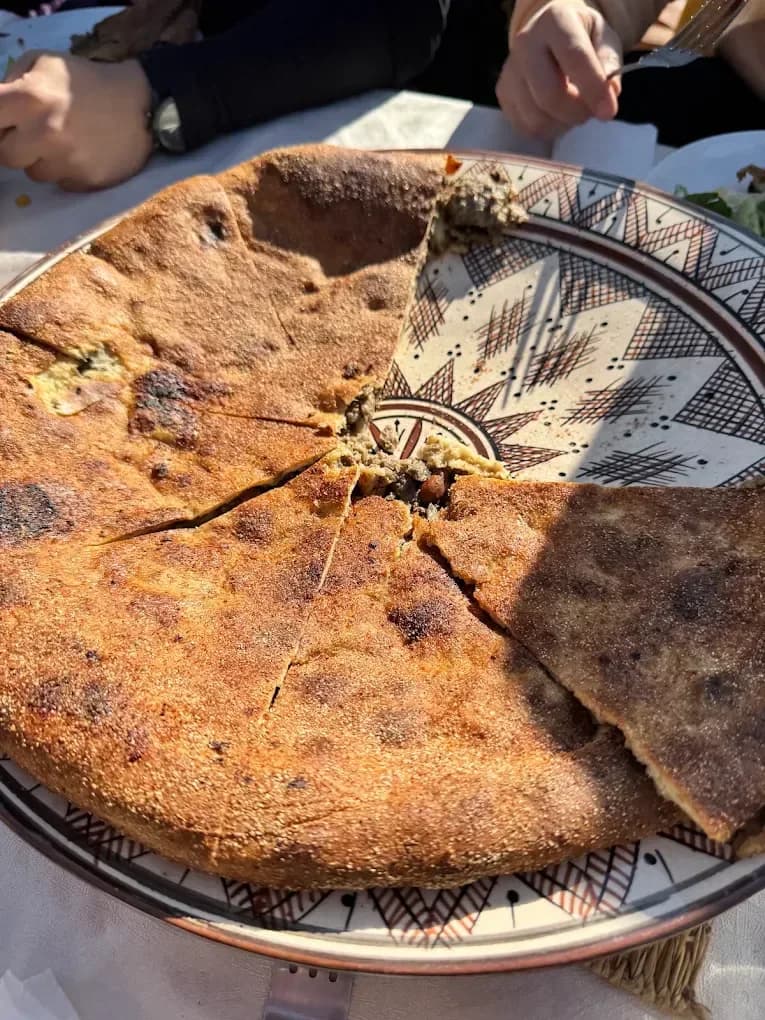
In Morocco, what people eat at sunset to end the day's fast is called ftour, which means breakfast. The classic way to start is with dates and a glass of milk or water, followed by harira, the tomato, lentil and chickpea soup. On the table there are hard-boiled eggs, bread, msemen, which are thin flaky flatbreads, and chebakia, a fried sweet with honey and sesame that you only see in large quantities during this month. Then tea or coffee.
Many riads and hotels offer their guests a traditional ftour, and it works as an early dinner. If you get the chance to be invited by a family, accept: it is one of the memories travellers mention most when they get back. More about these dishes in our guide to Moroccan food.
The proper dinner comes later, around ten or eleven, and some people eat again before dawn, at suhoor.
Ramadan nights
After ftour the city wakes up. Families go out for a stroll, mosques fill for the night prayers, cafés stay open late and the medinas are livelier than on any other night of the year. In Marrakech, Jemaa el-Fna square fills up after dinner, and in Fez or Rabat the shopping streets are busy until after midnight.
Towards the end of the month comes the Night of Power, the 27th night according to Moroccan tradition, one of the most important in the religious calendar. Mosques are packed and many families dress their children in traditional clothes.
How to show respect as a traveller
Nobody will ask you to do anything special, but some gestures are noticed. This is the list we give our travellers:
- Don't eat, drink or smoke in the street during the day. Inside the hotel, restaurant or car, no problem.
- Dress a little more modestly than usual, with shoulders and knees covered in the medina.
- Be patient in the afternoon. Some people have gone all day without eating or drinking and tempers fray.
- Don't sit on a terrace eating in front of a mosque at prayer time.
- If someone invites you to their ftour, bring sweets or fruit.
- Wishing people "Ramadan mubarak" is always well received.
For other everyday etiquette, see our guide to customs and etiquette in Morocco.
How it affects each kind of trip
The imperial cities
This is where Ramadan is most noticeable. In Fez, Meknes or Marrakech the medina workshops open later, some monuments shorten their hours and in the afternoon many shops pull down their shutters before ftour. In exchange, the nights are better than ever. We schedule guided visits for the morning, leave the afternoon free for the hotel and go out again after dinner.
The desert and the valleys
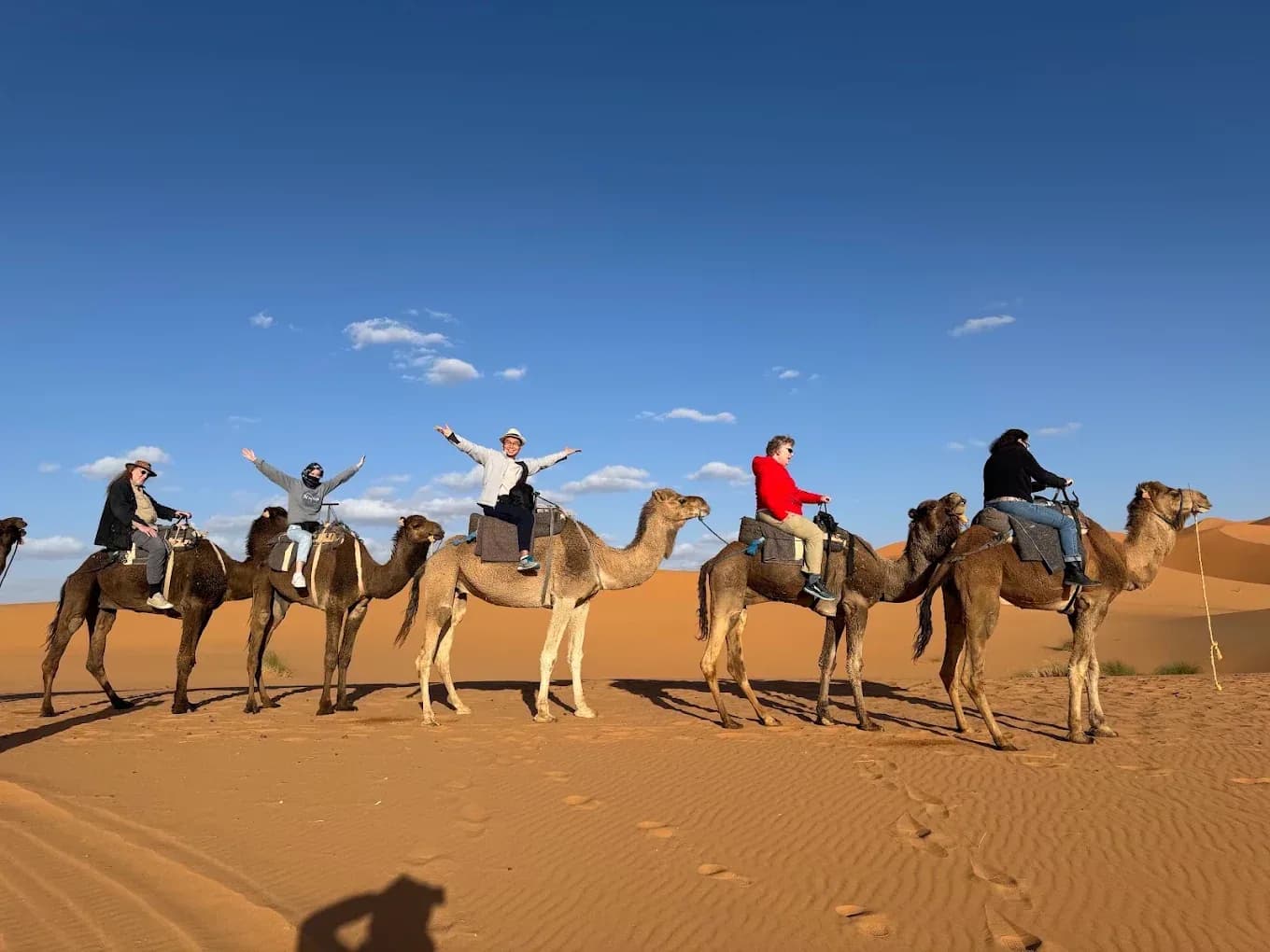
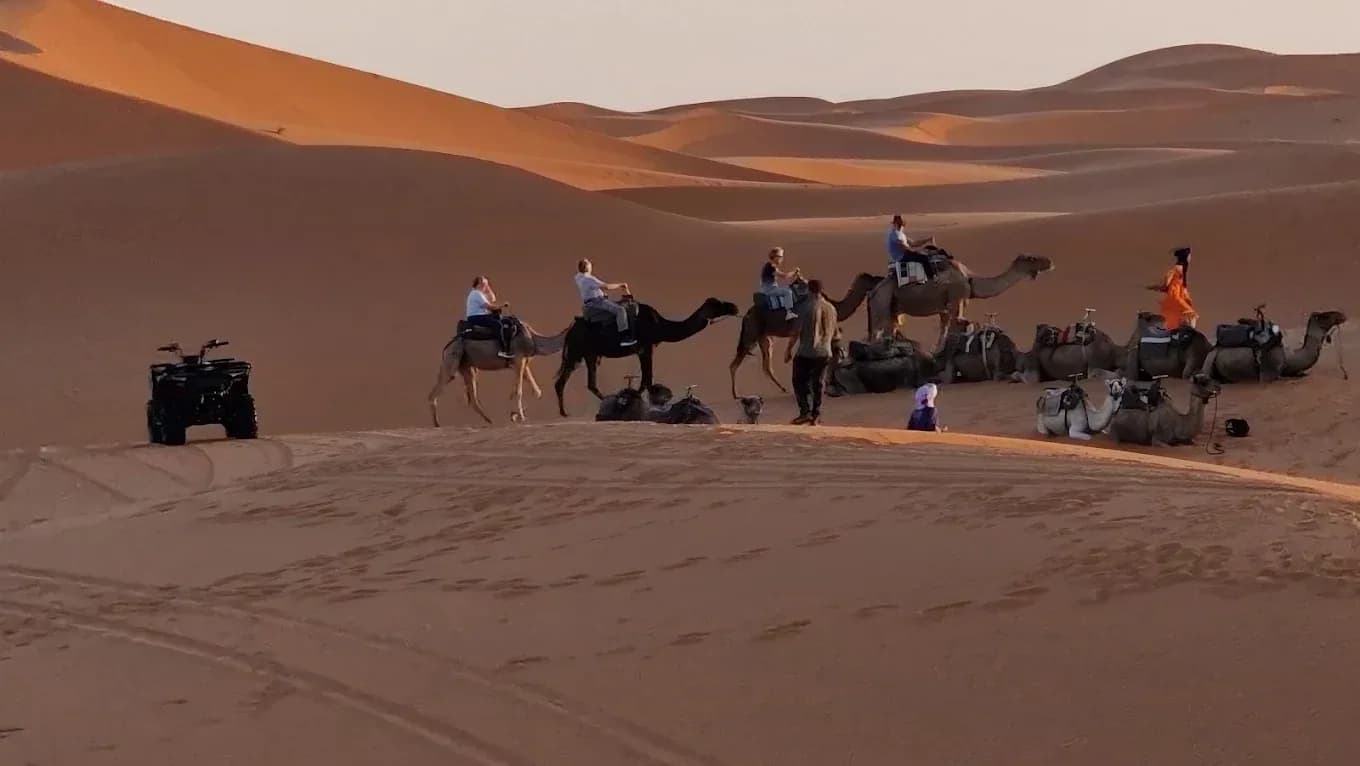
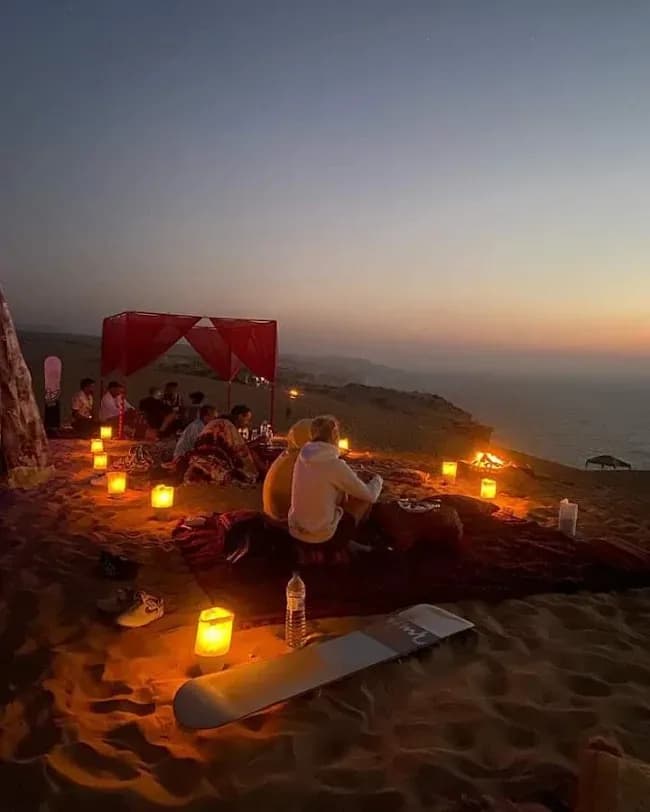
You hardly notice it. The camps at Erg Chebbi and Zagora run as usual, with dinner and breakfast for travellers. On a route like the 3 days from Fez to Merzouga or Marrakech to Merzouga in 3 days, what changes is that some villages along the way have fewer places open for lunch, and we already know which ones serve food. To choose between the two dune areas, read Merzouga or Zagora.
The mountains and the Atlas
In the Atlas villages the pace is relaxed all year, and even more so during Ramadan. If you are going trekking, the guide and the muleteer may be fasting. Routes are adapted with slightly shorter stages.
Your driver and your guide
Your driver will normally be fasting. He won't ask you to do the same, and you can eat and drink in the car. We stop for lunch at the usual time, you eat and he rests. He will, however, take his break at ftour time to break the fast, and it's best not to schedule anything during that half hour.
Where to eat during the day
It is the number one practical question, so here are the details.
In Marrakech, Fez, Casablanca, Rabat, Tangier and Essaouira there are restaurants aimed at travellers that open at midday throughout the month. They are usually in the newer parts of town, in hotels and on some medina terraces designed for tourists. Some draw their curtains or serve upstairs so that people aren't eating in view of the street. It isn't that it's forbidden: it's a form of respect.
In small villages along the way, in the Atlas or the Draa Valley, the village restaurants are normally closed until evening. That is what roadside hotels and the stops we already know are for. If you are travelling independently, buy fruit, bread, nuts and water in the morning from a grocer and always keep something in the car.
Breakfast at your accommodation works as usual. And at night, after ftour, the food stalls and cafés reopen, so dinner is never a problem anywhere.
Pros and cons of travelling during Ramadan
In favour: you see the country at one of the most special times of its year, the nights have an atmosphere you won't find the rest of the year and, outside Easter, there are fewer travellers and better availability in riads and camps. In 2027 it falls in February and March, which is a good time for the desert.
Against: if you travel independently and eat on the street, you'll have fewer options at midday. Opening hours for shops, banks and some monuments are reduced. The afternoon becomes chaotic before ftour, and afterwards there is a spell when nothing is open. And alcohol is harder to find, if that matters to you.
Our view: for an organised trip, with accommodation geared to travellers and a driver, Ramadan is not a problem. For a backpacking trip through small villages, you need to be better organised about food.
Eid al-Seghir, the end of Ramadan
Ramadan ends with Eid al-Fitr, which in Morocco is called Eid al-Seghir, the small feast. In 2027 it is expected around 9 or 10 March. It is one or two official public holidays. People wear new clothes, visit family and hand out sweets. Many shops close, and in the days before, trains, buses and roads fill with people heading back to their home towns.
If you arrive right on Eid, bear in mind that taxis may be hard to find and some medina shops will be closed. Hotels and excursions are not affected.
About two months later comes Eid al-Kebir, the feast of the sheep, which in 2027 is expected around mid-May. It is the most important holiday of the year: every family sacrifices a sheep, and for two or three days the country runs at half speed. The medinas are very quiet, many shops close and transport is full in the days before. If your trip coincides with it, let us know and we'll adjust the programme.
How to plan a trip on those dates
Choose accommodation that serves food to guests during the day, especially in small towns. Book dinners for the days you'll be in the medina. Keep the important visits for the morning. And if your return flight is on the day of Eid, leave for the airport with extra time.
As for clothing and the weather in those months, the Moroccan winter brings cold nights in the desert and the Atlas; we explain it in travelling in Morocco in winter and, for the rest of the year, in the best time to visit Morocco.
If your dates fall during Ramadan and you're not sure how to organise them, write to us and we'll suggest a route with timings adjusted to the month. You can also browse our desert trips, which change least during these weeks.
Frequently asked questions
Do I have to fast if I travel to Morocco during Ramadan?
No. Fasting is a religious obligation for Muslims, and travellers are not asked to follow it. You can have breakfast, eat and drink water as normal in your hotel, at the riad, in restaurants aimed at tourists or in the car. What people do appreciate is not doing it conspicuously in the street or on the square during fasting hours.
When is Ramadan in 2027?
According to astronomical forecasts, it would begin around 8 February 2027 and end around 9 March, with Eid al-Seghir one or two days later. The exact date depends on sighting the crescent moon, and the Ministry of Habous announces it the evening before. Confirm it a few days before you travel.
Are monuments open during Ramadan?
Yes, they generally open, although some shorten their hours and close earlier than usual in the afternoon. The same goes for banks, offices and many shops. Plan your visits for the morning and early afternoon, and keep the end of the day for strolling and watching the city get ready to break the fast.
Can you buy alcohol during Ramadan?
It is harder than the rest of the year. Many shops and supermarket sections that sell alcohol stop doing so for the month, and some bars close. Hotels and restaurants licensed for tourists usually keep serving it to their foreign guests. If it matters to you, ask when you book your accommodation.
Does Ramadan affect a trip to the desert?
Very little. The camps at Merzouga and Zagora run as usual, with dinner and breakfast, and the routes through the valleys don't change. Your driver may be fasting; if you wonder why he doesn't eat with you at lunchtime, that's why. We still stop for lunch, and he takes his break when it's time to break the fast.