Morocco in winter: weather, routes and what to pack
Morocco from December to February, region by region: sun by day, nights near freezing in the desert and the Atlas, snow on the passes, routes that work and what clothes to bring.
Published on · 10 min read
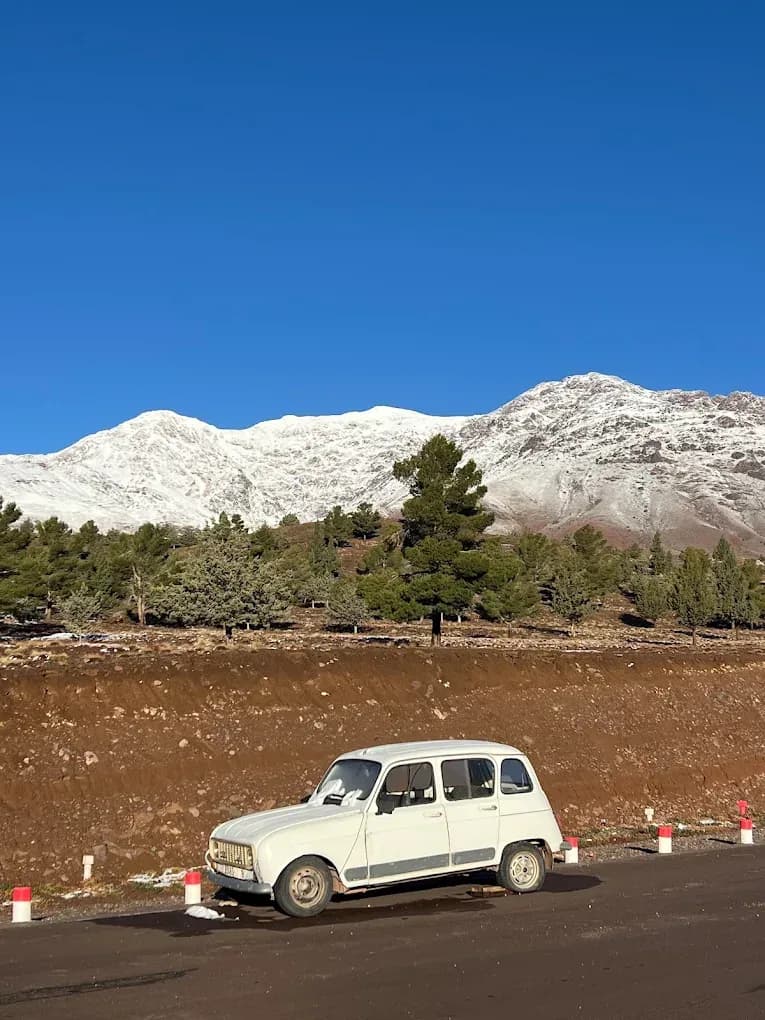
Travelling in Morocco in winter, from December to February, works very well if you know what to expect: sunny days and mild temperatures in Marrakech, the south and the coast, and cold nights inland, around zero degrees in the desert and the mountains. The Atlas is usually snow-capped, there are fewer people than in spring except at Christmas and New Year, and the low winter light is very good for photos.
Many travellers from Latin America come at this time of year during their summer holidays, and many Spaniards come for the early-December long weekend or the festive season. We tell them all the same thing: the problem with the Moroccan winter isn't the day, it's the night indoors. Here it is region by region, with what changes from December to February. If you want to compare with the rest of the year, see the best time to visit Morocco.
How winter changes from December to February
December starts quietly. The first two weeks are some of the best of the year to travel cheaply and without crowds, with sunny days and the first snow in the Atlas. From the 20th, everything changes: Christmas and New Year are the most requested dates of the year in Marrakech and the desert.
January is the coldest month. The first week is still busy because of the Epiphany holidays, and then things calm down. It is the easiest time to get a small riad or a camp with a private bathroom.
February is similar to January, with slightly longer days and slightly higher temperatures. In 2027 it coincides with Ramadan, which according to astronomical calculations would begin around 8 February and last until around 9 or 10 March. The date is set by the Ministry of Habous and Islamic Affairs after sighting the moon, so it may shift by a day. The country runs as normal, but opening hours for shops and restaurants change. Always check official sources before you travel.
Something that applies to all three months: it gets dark early, roughly between half past five and six in the evening depending on the area. On a road trip that means fewer hours of daylight, and we prefer not to drive mountain roads at night.
Marrakech and the south in winter
In Marrakech, from December to February, highs are usually between 18 and 20 degrees with sunshine, and lows between 5 and 7. At midday you can walk around the medina in a light long-sleeved top or a T-shirt. Early in the morning and at night it is genuinely cold.
What surprises many travellers is the inside of the riads. They are thick-walled houses built around an open courtyard, designed for heat. In January, your room can be cold if there's no heater. Good places to stay have heating in each room or a fireplace, and it is one of the things we check before booking in winter. If you book a riad yourself, ask.
From the roof terraces you can see the snow-covered Atlas, one of the finest views in the city during these months. There are ideas for your days in the city in what to see in Marrakech.
Agafay, about 40 kilometres away, is a good option if you want a night in the desert without the nine hours to Merzouga, but in winter it is cold there at night too. Dinner is usually in a tent or by the fire.
Ouarzazate and Aït Ben Haddou have pleasant days and very cold nights. The Dades Valley, higher up, is cooler still at night, which is why we make sure the hotel where we stay on that stage has heating.
Fez, Meknes and the north in winter
The north is damper and rainier than Marrakech. In Fez and Meknes winter is cooler and there are more grey days, although plenty of sunny ones too. A medina in the rain is slippery, so bring shoes with good grip.
Chefchaouen, in the Rif Mountains, is the coldest and wettest stop in the north in January and February. The houses are small and you notice the damp. If you go, choose accommodation with heating and don't count on clothes drying overnight. Read Chefchaouen: what to see and how to get there to plan your visit.
Tangier has a mild but changeable winter, with wind. If you are crossing from Spain by ferry, bear in mind that on stormy days in the Strait sailings can be delayed or cancelled. Leave half a day of margin between the ferry and any important connection.
The Sahara in winter
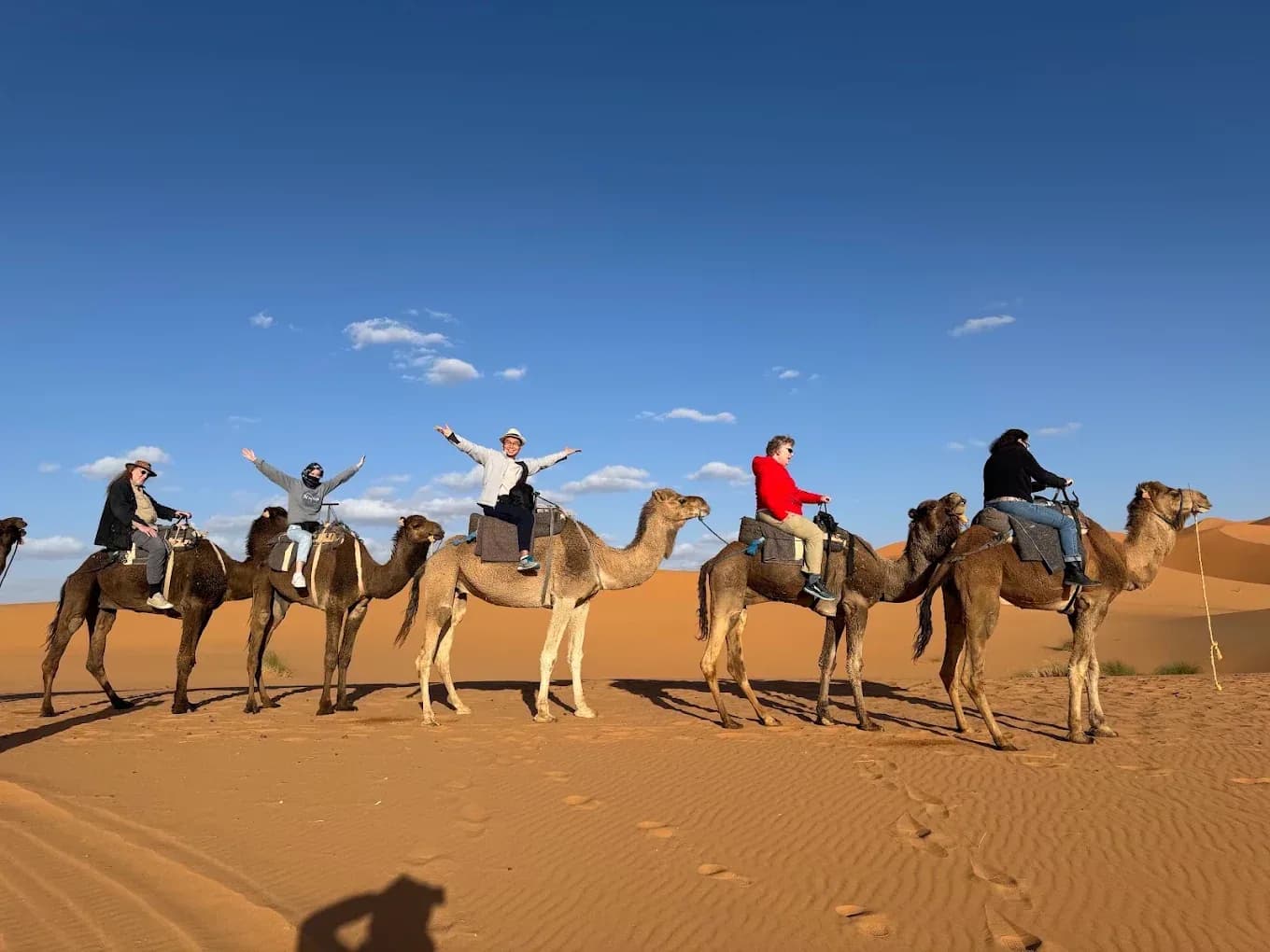
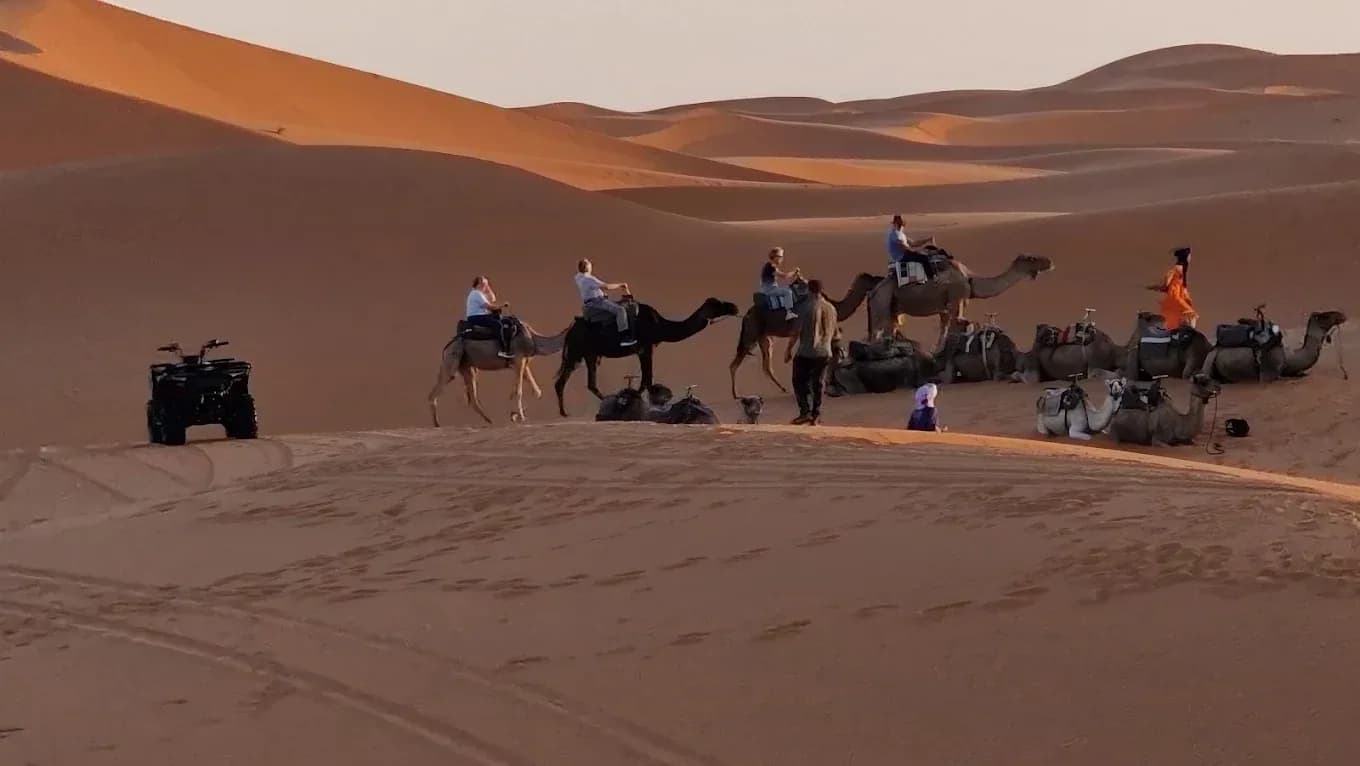
In Merzouga and Zagora, in December and January, days are around 18 to 20 degrees with sunshine. It is the best time of year to walk on the dunes or ride a camel: no heat, clean air, soft light in the afternoon.
What desert nights are like
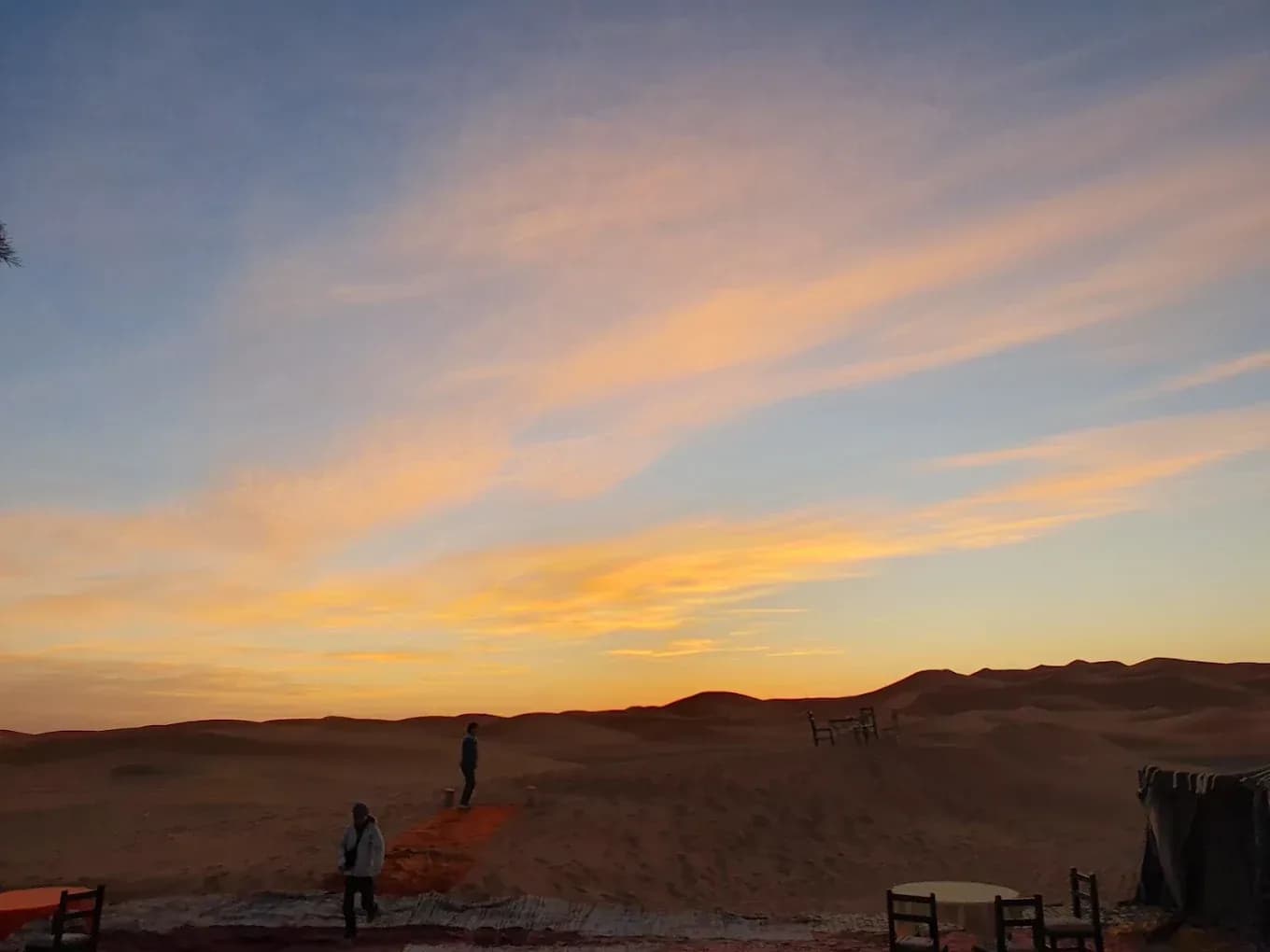
When the sun sets the temperature drops very fast. Within an hour you go from a T-shirt to reaching for your coat. In the early hours, in December and January, it gets close to zero and on some nights below. The coldest moment is just before sunrise, which is exactly when everyone wants to climb the dune.
The tent is made of canvas and wool. It keeps out the wind, but it doesn't hold heat like a house. All the camps we work with have thick blankets. In the higher categories there is usually heating or electric blankets. What changes the night most is having the bathroom inside the tent: going out at three in the morning to a shared bathroom at zero degrees is what people who chose the most basic camp remember most.
That's why, in winter, we recommend the Superior option, with a private bathroom, to couples, families and older travellers. On our private tours the vehicle with a driver is paid per day and shared between the travellers, and accommodation is per person per night, so switching from Standard to Superior only affects the accommodation part. A young, flexible traveller can go Standard without any problem if they bring good clothes. We explain the differences between camps in sleeping in the Moroccan desert.
These five things help our travellers most on a January night in the dunes. Sleep in thermals and a hat, because you lose a lot of heat through your head. Put the next morning's clothes in bed with you, so you don't have to put them on ice-cold. Bring a thermos with hot water or tea. Climb the dune for sunset and sunrise in a coat, hat and gloves, because it's windy at the top. And eat a good dinner: the camp's hot harira does a lot.
The Atlas in winter
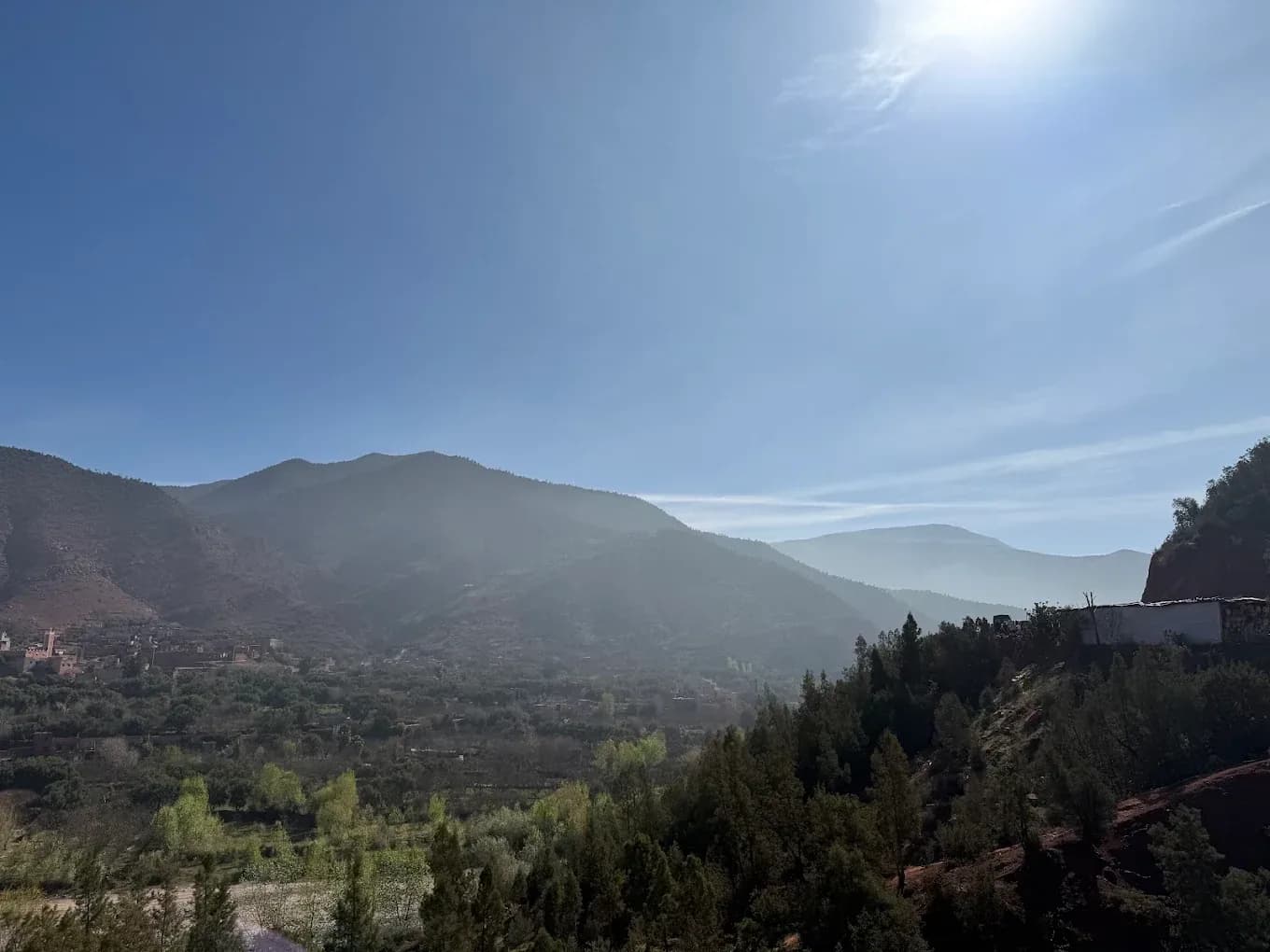
In the High Atlas it snows often from December to February. The peaks around Imlil and Toubkal turn white and the valley looks very different from the rest of the year. Imlil is about 65 kilometres from Marrakech, an hour and a half by car, at 1,740 metres: a day trip through the Berber villages is easily done in winter with good footwear and warm clothes.
When there is enough snow, the Oukaïmeden ski station near Marrakech opens its slopes. There isn't always snow, so don't plan it as the centrepiece of your trip.
Climbing Toubkal, at 4,167 metres, is another matter in winter: it is high-mountain terrain, with ice and intense cold, and you need crampons, an ice axe, experience and a guide. We don't recommend it to anyone who hasn't done winter mountaineering before. In spring and autumn it is a much more accessible route.
What nights are like in the Atlas
In refuges and guesthouses in the mountain villages, winter nights are cold and the heating is usually a wood stove in the shared living room. Bedrooms can be just a few degrees. Bring a sleeping bag if you are trekking and warm pyjamas if you're staying in a guesthouse. Hot water is sometimes limited. If you'd rather avoid that cold, the practical option is to do the mountains by day and go back to sleep in Marrakech.
The mountain passes
The Tizi n'Tichka pass, at about 2,260 metres, is the only way from Marrakech to Ouarzazate and the desert. After heavy snow it can close for a few hours or, occasionally, a whole day. In the Middle Atlas, the route from Fez to Merzouga goes through Ifrane, Azrou and Midelt, which also see frequent snow. That's why in winter we like to set off early, leave a spare day at the end of the trip and talk to drivers who cover that road every week.
The Atlantic coast in winter
Agadir is one of the mildest places in the country in winter, with lots of sunshine. It attracts people escaping the European cold, and the water is cool, although some people do swim. To combine beach and desert, see our Agadir guide.
Essaouira has mild temperatures, but the wind is almost constant and it turns chilly in the afternoon. It makes a good day trip from Marrakech, about two and a half to three hours away, as long as you bring a windproof jacket. More information in Essaouira.
Which route to choose in winter depending on who's travelling
For a couple with a week, the classic route from Marrakech to the desert is still the favourite. The 3-day trip from Marrakech to Merzouga crosses the Atlas, often under snow, passes Aït Ben Haddou, the Dades Valley and the Todra Gorge and reaches the dunes. Bear in mind that the return from Merzouga to Marrakech is 9 or 10 hours on the road; in winter, with less daylight, we prefer to split it in two if you have an extra day.
If you arrive via Fez, the 3-day trip from Fez to Merzouga goes through Ifrane and the cedar forests of Azrou, where in winter there is usually snow and, with luck, Barbary macaques. Fez and Merzouga are about 470 kilometres apart, about 8 or 9 hours with stops, so it is a long day with little light.
A family with small children will find it easier without a night in Merzouga. Marrakech, a night in Agafay, a day in the Atlas and two in Essaouira or Agadir make a trip with little driving and more comfortable nights. Children pay 3% less than an adult on our tours.
Solo travellers on a tight budget can make the most of January and February, when there is more space in riads and camps and accommodation rates drop outside public holidays.
If you'd rather avoid the cold desert nights, the imperial cities and the coast are a good alternative: Marrakech, Essaouira and Agadir, or Fez, Meknes and Rabat. Take a look at our cultural trips.
Christmas and New Year in Morocco
Spending New Year's Eve in the desert has become a tradition for many travellers, and it is the most requested night of the whole year in Merzouga. We cover it in New Year in Morocco and in our New Year in the Moroccan desert programme. If you want these dates, book as early as you can: camps with private bathrooms are the first to fill up.
What to pack for Morocco in winter
The rule is to dress in layers, because in a single day you go from the morning cold to the midday sun and back to the cold. This is what goes on our list for a winter trip with a night in the desert:
- long-sleeved tops and a few short-sleeved ones for midday;
- a fleece or thick jumper;
- a down or padded jacket that packs small;
- thermals for sleeping, top and leggings;
- a hat, thin gloves and a large scarf;
- thick socks and warm pyjamas;
- comfortable long trousers, plus waterproof ones if you're going to the north or the Atlas;
- closed trainers for the medinas and boots if you'll be walking in the mountains;
- sunscreen, sunglasses and lip balm, because the winter sun burns on snow and sand and the air is very dry;
- a head torch and a power bank, because batteries run down faster in the cold.
You'll find the full list in what to pack for Morocco.
Before you travel
Check the entry requirements for Morocco for your nationality in good time. If your trip falls in February 2027, confirm the Ramadan dates as they get closer. And take out insurance that covers flight changes, in case the weather changes your plans.
Plan your winter trip
Winter is one of our favourite times to show people Morocco: the desert without the heat, the Atlas under snow and medinas with fewer people. We choose accommodation with heating and camps with good blankets, and we leave margin in case it snows on the passes. Write to us via the contact page with your dates or browse our desert trips.
Frequently asked questions
Is Morocco cold in winter?
Not much during the day: in Marrakech, the south and the Atlantic coast you can normally expect sun and mild temperatures. The cold arrives at nightfall, especially inland. In the desert and the mountains nights are around zero degrees or below, and many riads have no central heating. Dress in layers and bring some properly warm clothing.
Can you go to the desert in January?
Yes, and many travellers like it more than spring: the midday sun is pleasant for walking on the dunes and the night sky is very clear. The hard part is the night, which can get close to zero degrees. With a camp that has thick blankets and a bathroom inside the tent, the cold is easy to handle.
Do the Atlas roads close because of snow?
Sometimes. After heavy snow, the Tizi n'Tichka pass, on the road from Marrakech to Ouarzazate, or a stretch of the Middle Atlas can close for a few hours or, rarely, for a day. That is why in winter we leave slack in itineraries, keep an eye on road conditions and, if necessary, change timings or the order of the route.
Is winter high season in Morocco?
Only partly. Between Christmas and Epiphany (6 January) demand in Marrakech and the desert is very high, with higher prices and less availability. January and February, apart from long weekends and school holidays, are quiet months, with more space in riads and camps and better accommodation rates.