Moroccan food: typical dishes, etiquette and tips
A day of eating in Morocco, from breakfast to dinner: what people eat in each region, how to order vegetarian, how to behave in someone's home and how to eat street food without trouble.
Published on · 10 min read
Moroccan food is easiest to understand by following an ordinary day of meals: bread with olive oil and honey in the morning, tea at any hour, a tagine or couscous at lunchtime, something sweet in the afternoon and a dinner that comes late in people's homes. The most common spices are cumin, ginger, cinnamon, turmeric and saffron, and the mix of sweet and savoury turns up in many dishes. You eat well almost everywhere, and eating vegetarian is easy.
When we organise a trip, food is one of the topics that generates the most questions on WhatsApp, sometimes out of curiosity and sometimes out of worry about the stomach. Here is what a day of eating looks like, what changes from one region to another and what we do to make sure nobody goes without dinner in the desert.
What people eat for breakfast in Morocco
In a riad or hotel, a Moroccan breakfast is generous. There is usually homemade bread (khobz), msemen, a sort of square, flaky pancake, baghrir, the "thousand-hole bread" eaten with butter and honey, and harcha, a semolina flatbread a bit like a not-very-sweet sponge. Alongside come olive oil, jam, fresh cheese, sometimes eggs, and freshly squeezed orange juice.
In the south, and especially around Agadir and the Souss, you'll see amlou, a spread of toasted almonds, honey and argan oil. Many people take a jar home. If you buy some, a cooperative is a better bet than a roadside stall.
On the street, breakfast is different. In Fez and the north bissara is very common, a thick soup of dried broad beans with olive oil and cumin, eaten from a bowl with bread. It is cheap, very filling and vegan. In the markets you'll also see sfenj, ring-shaped doughnuts fried on the spot and sold threaded on a palm leaf.
In Fez, if you are invited to breakfast in a home, khlii may appear: dried beef preserved in fat, fried with eggs. It is a strong flavour. Some people love it and others find once is enough.
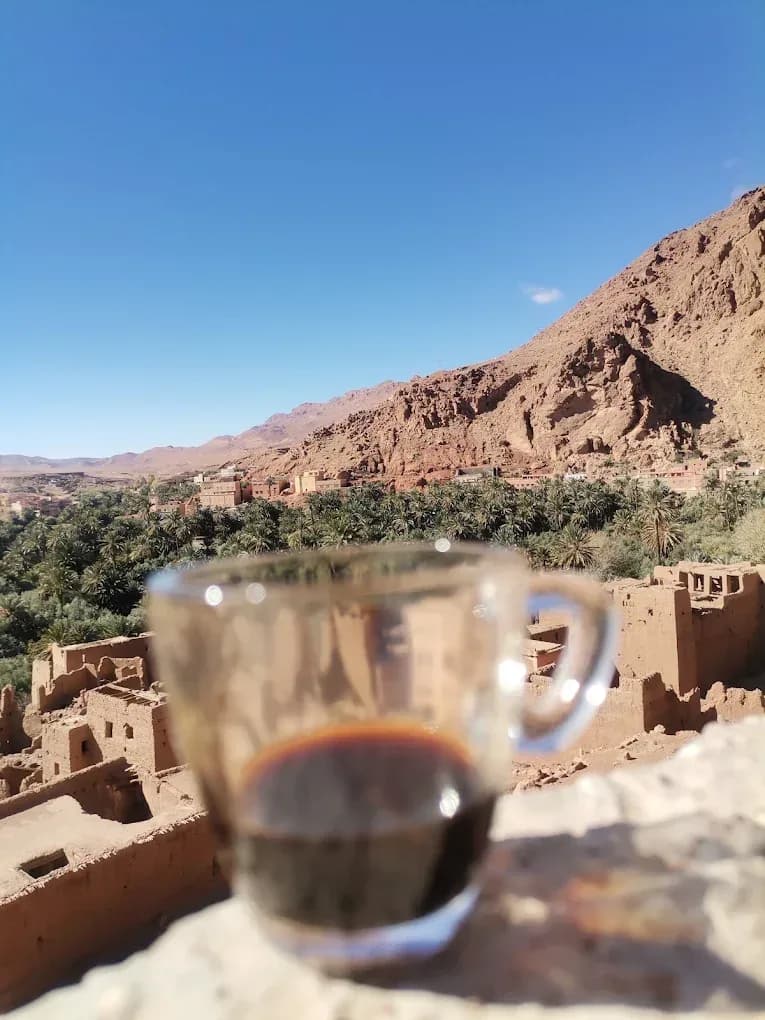
A practical note: Moroccan café coffee is usually short and strong. If you want it with milk, ask for a nus nus, which means "half and half".
Mint tea at any time of day
Green tea with mint, very sweet, has no set time. You're offered it when you arrive at the riad, in a souk shop while you look at rugs, in a house in the Atlas and at the camp after the camel ride. It is poured from a height so it froths, and whoever pours usually tastes it before handing it to you.
Turning it down doesn't cause offence. Even so, accepting at least one glass is a nice gesture, and if you don't want so much sugar you can ask for it "bla sukar", without sugar, although they won't always listen. Accepting tea in a shop doesn't oblige you to buy anything, something we explain in more detail in customs and etiquette in Morocco.
What people eat at lunchtime
In Morocco the main meal of the day is lunch. In the cities restaurants fill up between roughly one and three o'clock. The typical meal starts with several cooked salads, eaten with bread: aubergine zaalouk, pepper and tomato taktouka, carrots with cumin, beetroot. Then comes the main course.
Tagine
Tagine is the name of both the dish and the clay pot with a conical lid in which it cooks slowly. The classic versions are chicken with preserved lemon and olives, lamb or beef with prunes and almonds, kefta (spiced meatballs in tomato sauce with egg) and vegetable. Eating five tagines in a week of travelling is not unusual: on the southern route it is what roadside restaurants offer most.
Friday couscous
Couscous is steamed wheat semolina, with vegetables, chickpeas and meat or chicken. In many families it is the Friday dish, after the midday prayer, and some restaurants only serve it on that day. Couscous tfaya, with caramelised onion, raisins and cinnamon, is the one our travellers like best.
Eating on the road to the desert
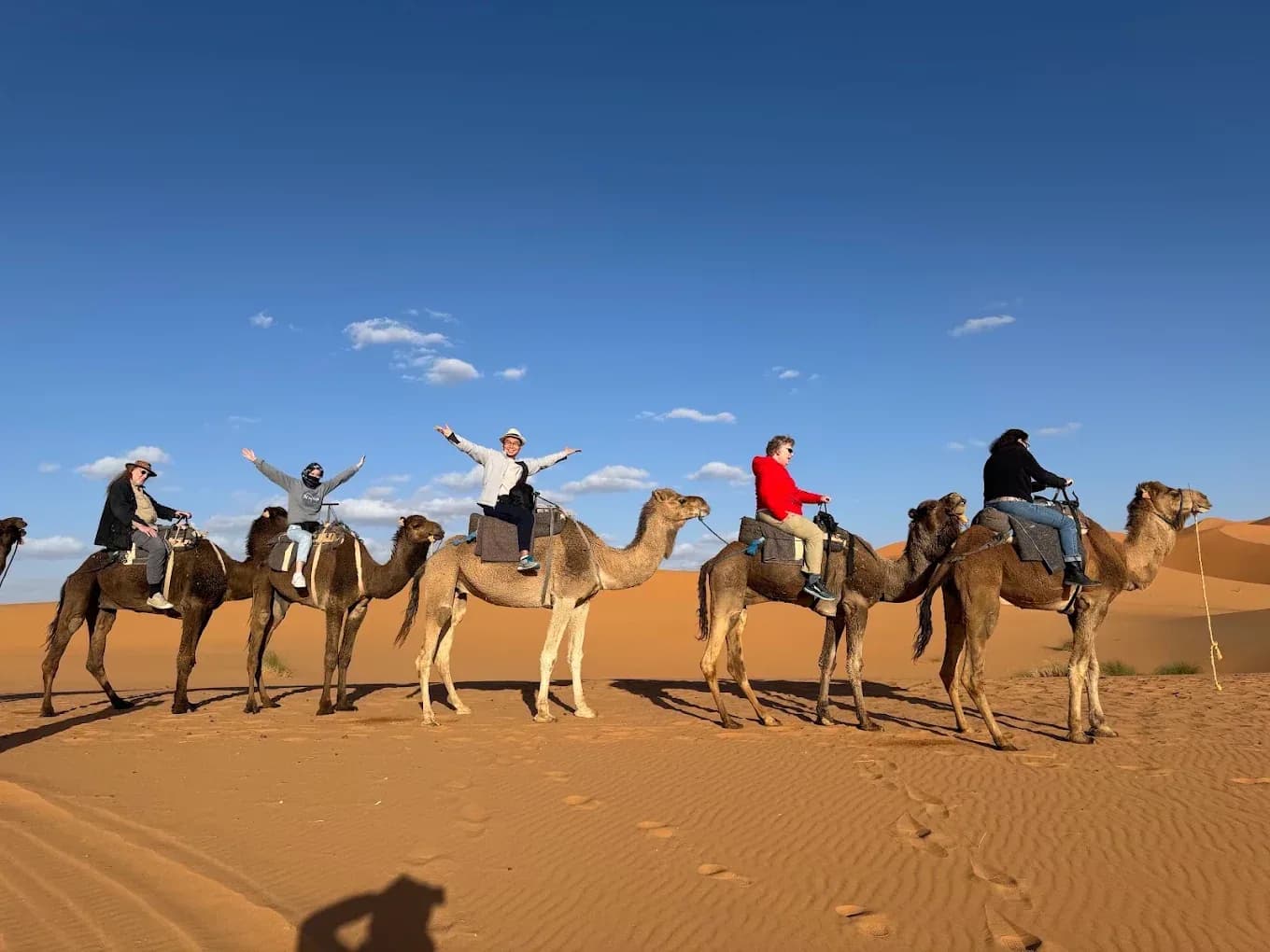
On desert tours lunches aren't included, because everyone eats when and as much as they want. On the 3-day trip from Marrakech to Merzouga we usually stop for lunch near Aït Ben Haddou or Ouarzazate on the first day, and around the Todra on the second. From Fez, the lunch stop is usually in Midelt. These are simple restaurants, with salads, tagine or kebabs and fruit. Dinners at the hotel in the Dades and at the camp are included, along with breakfast.
A tip for long driving days: don't eat too much at lunch if you still have the Tizi n'Tichka pass ahead, at about 2,260 metres and with lots of bends. People who get carsick will thank you.
Afternoon snacks and sweets
In the middle of the afternoon, people at home have tea with something: msemen again, bread with oil, biscuits or nuts. It's time for sweets, which are based on almonds, honey, sesame and orange-blossom water. Gazelle horns are the best known. Chebakia, fried and soaked in honey, is typical of Ramadan. Almond briouats are small triangles of thin pastry, and sellou is a paste of toasted flour, almonds and sesame eaten by the spoonful.
On the street you'll see orange juice stalls on every corner and avocado smoothies, which here are drunk sweet. If you come in winter, try a bowl of hot harira late in the afternoon: it goes down very well when the temperature drops.
What to have for dinner in Morocco
At home people eat dinner late and often lighter than at lunchtime. Harira soup, made with tomato, lentils, chickpeas and spices, sometimes with a little meat, is a common dinner. During Ramadan it is the dish used to break the fast, served with dates and sweets.
For travellers, dinner is the time for festive dishes. Pastilla (also called bastilla) is a very thin pastry traditionally filled with pigeon or chicken, almonds, egg and spices, dusted with icing sugar and cinnamon. It is a Fez speciality, and there is a seafood version more common on the coast. Mechoui is lamb roasted for hours until the meat falls apart, eaten with salt and cumin. Rfissa, torn bread with chicken, lentils and a fenugreek sauce, is a home-cooked dish few visitors know, and it is worth ordering if you see it on a riad's menu.
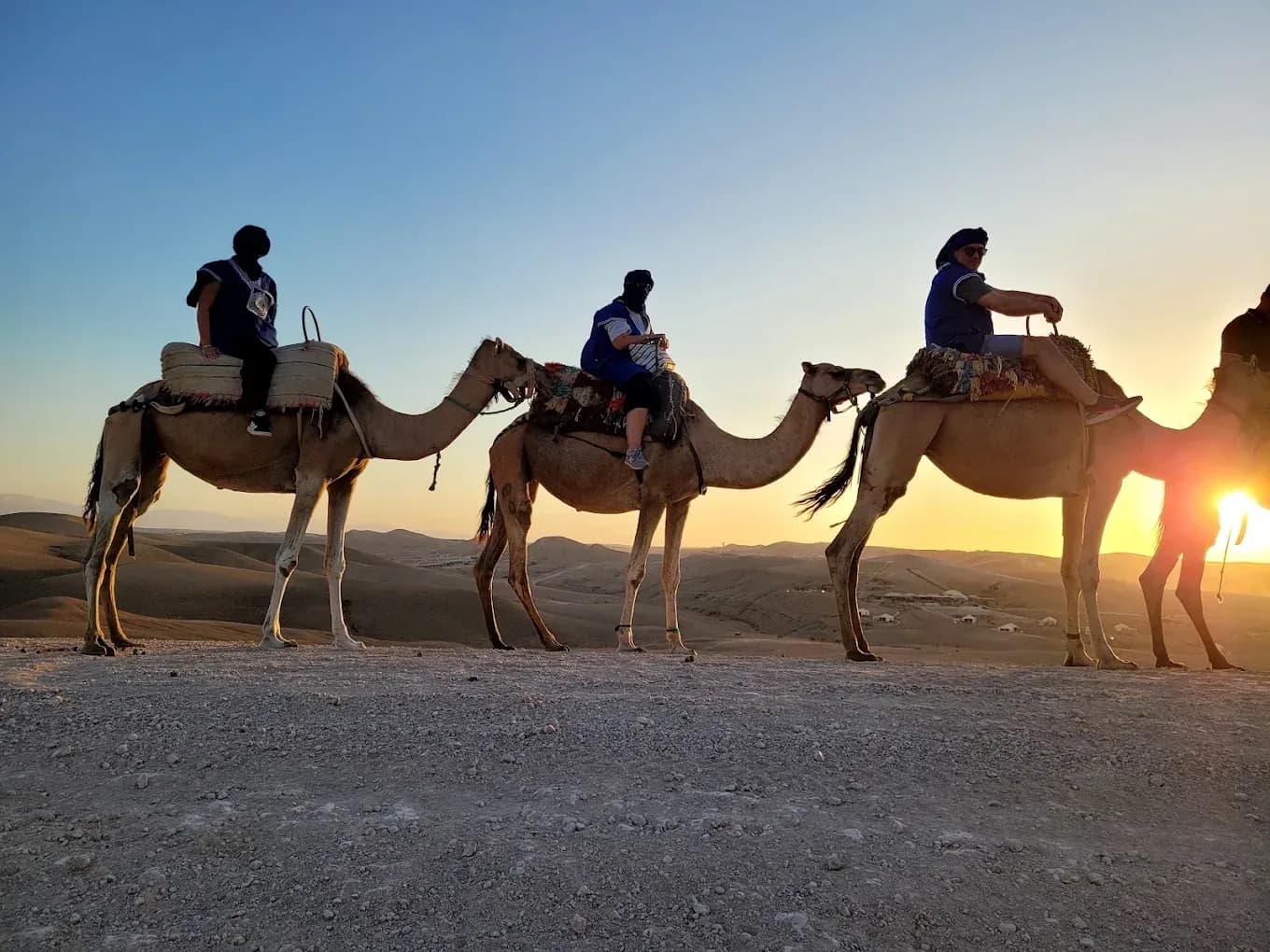
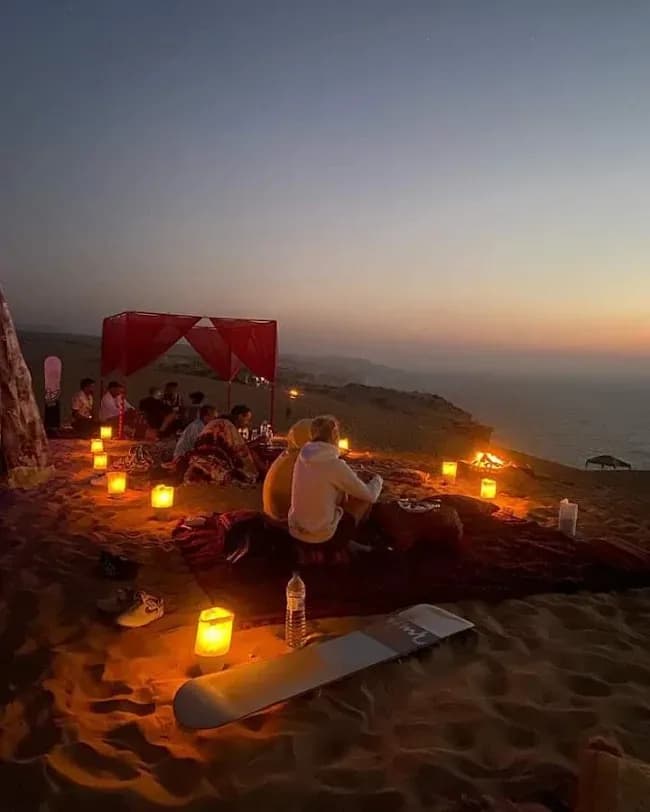
If you are in Marrakech, one of the dinners we recommend most is outside the city: the dinner under the stars in the Agafay desert, about 40 kilometres away, with a dromedary ride at sunset, salads, tagine or couscous by the fire and the return to the city at about half past ten. It works very well for families with children because the drive is short.
Typical dishes by region
Morocco doesn't eat the same everywhere. What follows is what we look for ourselves when we pass through each area.
Marrakech
Tanjia is the city's dish: beef or lamb in a tall clay jar, cooked for hours in the ashes of the furnace that heats the hammam. You'll find it at specialist stalls near Jemaa el-Fna. At night the square fills with stalls selling kebabs, fried sardines, sheep's head and snails in spiced broth. There are more ideas in what to see in Marrakech.
Fez and Meknes
Fez is the city of pastilla and traditional medina cooking, with recipes that came from Al-Andalus. It is a good place to order a long menu in a riad and try several salads, pastilla and a meat tagine with prunes. We cover it in more detail in what to see in Fez.
Tangier and the north
In Tangier people eat a lot of fish, and on the street they sell calentica, a kind of savoury chickpea-flour custard served hot with cumin. The Spanish influence shows in some words and some dishes.
Essaouira and the Atlantic coast
At Essaouira's port you choose your fish at the stalls and they grill it for you on the spot: sardines, sea bream, squid, prawns. Ask the price per kilo and the quantity before they cook it. Chermoula, a marinade of coriander, garlic, cumin, paprika and lemon, appears in almost every fish tagine. From Marrakech, the day trip to Essaouira from Marrakech gives you about four or five hours in the town, plenty of time to eat at the port. More information in our Essaouira guide.
The Atlas
In the Berber villages people cook with what there is: vegetable or free-range chicken tagine, bread baked in a clay oven, olive oil, mountain honey and walnuts. On day trips to the Ourika Valley or Imlil, an hour to an hour and a half from Marrakech, it is common to eat in a home or a family restaurant in the valley.
The desert and the southern valleys
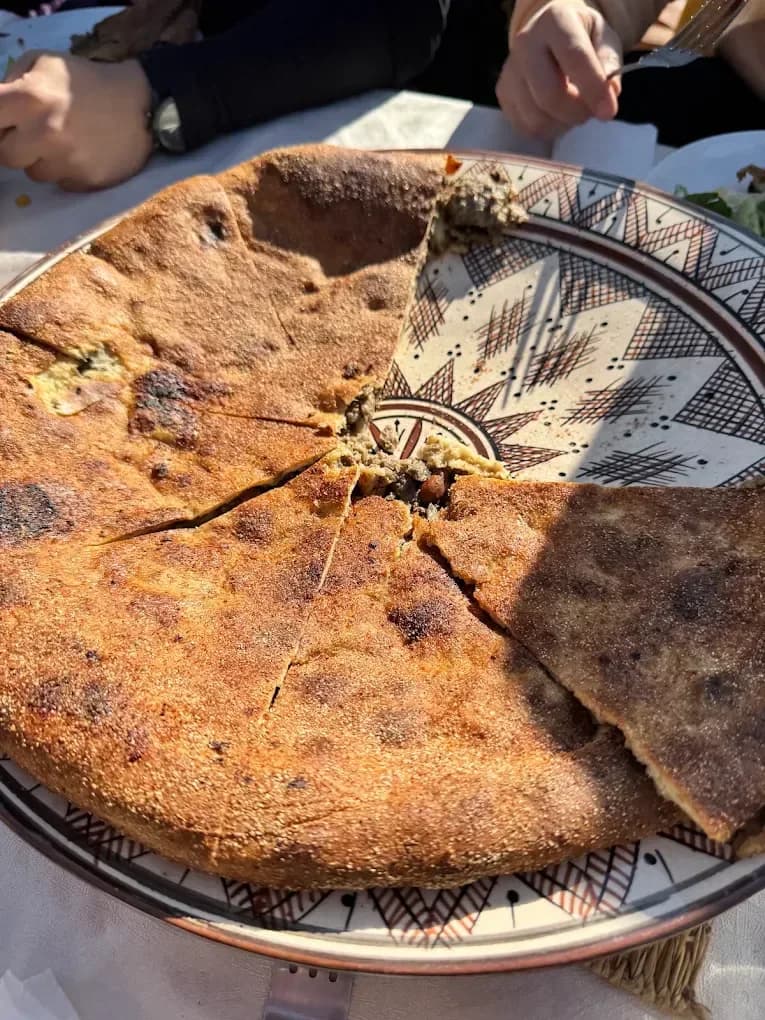
At the camp in Merzouga dinner is usually harira, salads and a tagine cooked on the spot, with fruit for dessert. In Rissani they make madfouna, which some call "Berber pizza": dough stuffed with minced meat, onion and spices, baked in an oven. Ask your driver for it in advance, because it is made to order. In the southern valleys the Berber omelette is also common, eggs cooked in a tagine with tomato and spices.
Vegetarian, vegan and gluten-free options
Morocco is easy if you don't eat meat. Almost every restaurant has a vegetable tagine, seven-vegetable couscous, cooked salads, lentils, bissara and omelette. What you need to ask about is the stock: harira and couscous are sometimes cooked with meat even if you don't see it on the plate.
For vegans it is harder. Butter, including smen, which is fermented butter, turns up in breads and sweets, and eggs and honey are part of many breakfasts. It can be done, but it's best to let people know.
The hardest is eating gluten-free, because couscous, bread, msemen and pastilla contain wheat, and bread comes with everything. Tagines are usually fine if you skip the bread; ask for rice or potatoes if they have them.
If you travel with us, tell us your diet or allergies when you book. We pass it on to every riad, hotel and camp before you arrive, and on the road your driver knows which restaurants handle a special request best.
Street food without stomach trouble
Street food is one of the best things about Morocco: kebabs, fried sardines, fish sandwiches, freshly made msemen, snails. Most of the stomach problems we see don't come from the street but from the water, tiredness and eating too much oil and spice on the first day. These are the rules we give our travellers:
- Choose stalls where local people eat, because the food turns over quickly.
- Order what is cooked in front of you and served hot.
- Save raw salads and unpeeled fruit until you've been here a few days.
- Drink bottled water and be wary of ice in very basic places.
- Wash your hands or use hand gel before eating.
- Ask the price before ordering, especially in Jemaa el-Fna.
- Go easy on the spices and fried food at first.
Pack something for digestive upsets in your first-aid kit, just in case. Our guide to what to pack for Morocco has the full list.
How to eat in a Moroccan home
On some of our routes you eat with a family, in the Atlas or in the south. Before the meal they'll bring you a jug and basin to wash your hands. You eat from a shared dish, with your right hand, using bread as a spoon, and everyone takes from the part in front of them. The meat is usually in the middle and the host shares it out, so wait for it to be offered.
Saying "bismillah" as you start is a gesture people appreciate. What many travellers find hard is stopping: the host will insist that you eat more. If you really can't, say everything was delicious and that you're full, with your hand on your chest. Nobody is offended by that.
Eating according to how you travel
A couple on a short trip usually wants a special dinner, and for that a riad in Fez or the Agafay dinner works well. A family with small children prefers fixed mealtimes and simple dishes: kebabs, roast chicken, omelette and bread cover almost every meal, and orange juice is always a hit. Solo travellers have the advantage of stalls and neighbourhood cafés, where nobody looks twice at someone eating alone. And if you are short on time, concentrate the street food in Marrakech and save the fish for a day in Essaouira.
As for money, eating on the street or in local restaurants is cheap, and eating in riads or restaurants aimed at visitors costs quite a lot more. We work it out in detail in how much it costs to travel to Morocco.
Cooking classes and meals on your trip
Many travellers ask us for a cooking class in a riad, a market visit with someone who explains the spices, or a meal with a Berber family in the Atlas. We add these to both family trips and cultural trips, and on a private tour they can fit into almost any day that isn't a long driving day. Tell us what you'd like via the contact page and we'll build it into your route.
Frequently asked questions
Is it easy to eat vegetarian in Morocco?
Yes, more than people expect. Almost every restaurant has a vegetable tagine, and cooked salads, bissara and lentils are everywhere. It is worth asking about the stock in the harira and the couscous, which is sometimes made with meat. A vegan diet needs more care because of butter, eggs and honey.
Can you drink tap water in Morocco?
In the big cities mains water is treated, but we advise our travellers to drink bottled water, especially in the first week, because the change of water is what upsets the stomach most. It is sold cheaply in any shop. Always check that the cap is sealed.
Do people eat with their hands in Morocco?
In homes and in traditional settings, yes. You use your right hand and a piece of bread serves as a spoon. Restaurants, riads and camps always have cutlery, so nobody will make you. If you eat in someone's home, follow your hosts and take food only from your side of the shared dish.
Can you drink alcohol in Morocco?
Yes, in hotels, licensed restaurants and bars in the big cities. Traditional restaurants and street stalls don't serve it, and drinking in public is frowned upon. During Ramadan sales may be restricted. In the desert camps it depends on each camp, so ask us before you book.