Morocco in 7 days: a detailed itinerary and alternatives
A week in Morocco day by day: Marrakech, the Atlas, Merzouga and Fez with real driving times, plus a version for families with children and another without the desert.
Published on · 11 min read
The way we most recommend seeing Morocco in 7 days is this: two nights in Marrakech, three days on the road through the Atlas, the valleys and the Merzouga desert, and two nights in Fez. In one week you see the two great imperial cities, cross the Atlas over the Tichka pass, stop at the kasbah of Aït Ben Haddou and sleep in the dunes of Erg Chebbi.
The price of that combination is the road: there are three days of driving in a row, one of them about eight hours. Below we take you through it day by day with the real times we work with our drivers, and at the end we give you two different versions, one designed for families with children and one for people who would rather not go to the desert.
Before you book your flights
What shapes this route most is the plane ticket. What works best is flying into Marrakech and out of Fez, or the other way round, so you don't repeat any stretch. If you can't find that combination, there are two solutions: go back from Fez to Marrakech by train, which is a long journey, or do the desert route as a loop from Marrakech, as we explain further down.
As for transport, for the days in the south the most comfortable option is a private vehicle with a driver. You can stop to take photos, eat when you are hungry and not depend on bus timetables that don't exist in many valleys. On our private tours the price is calculated per vehicle with a Spanish-speaking driver per day, shared between the travellers, plus accommodation per person per night, with a Standard or Superior option. Children pay 3% less than an adult.
The time of year matters less than it seems. The itinerary works all year round, although spring and autumn are the most comfortable months for the driving days. In winter the Atlas can have snow and in summer the desert is hot. We explain it in the best time to visit Morocco.
7-day Morocco itinerary
Day 1. Arrival in Marrakech
Arrival at the airport and transfer to the riad, usually inside the medina. Cars can't get into many streets, so the last stretch is usually on foot with a porter carrying the luggage in a handcart. This is normal and planned for.
If you arrive before mid-afternoon, take a first walk to Jemaa el Fna square at sunset, when the food stalls are set up and the musicians and storytellers appear. Have dinner on the square or on a rooftop. Don't try to see more on the first day: the noise and movement of the medina are tiring, and there is a lot to do tomorrow.
Day 2. Marrakech
A full day in the city. In the morning, with an official guide, you go round the medina: the Koutoubia, the Bahia Palace, the Saadian Tombs and the Ben Youssef Madrasa. You have lunch in a local restaurant and in the afternoon go to the Majorelle Garden and lose yourself for a while in the souks. A hammam at the end of the day gets your body ready for tomorrow's road.
In summer we reverse the order: monuments first thing, a rest at midday and the souks at sunset. All the ideas are in what to see in Marrakech and in the Marrakech guide.
Day 3. Marrakech, Aït Ben Haddou and the Dades Valley
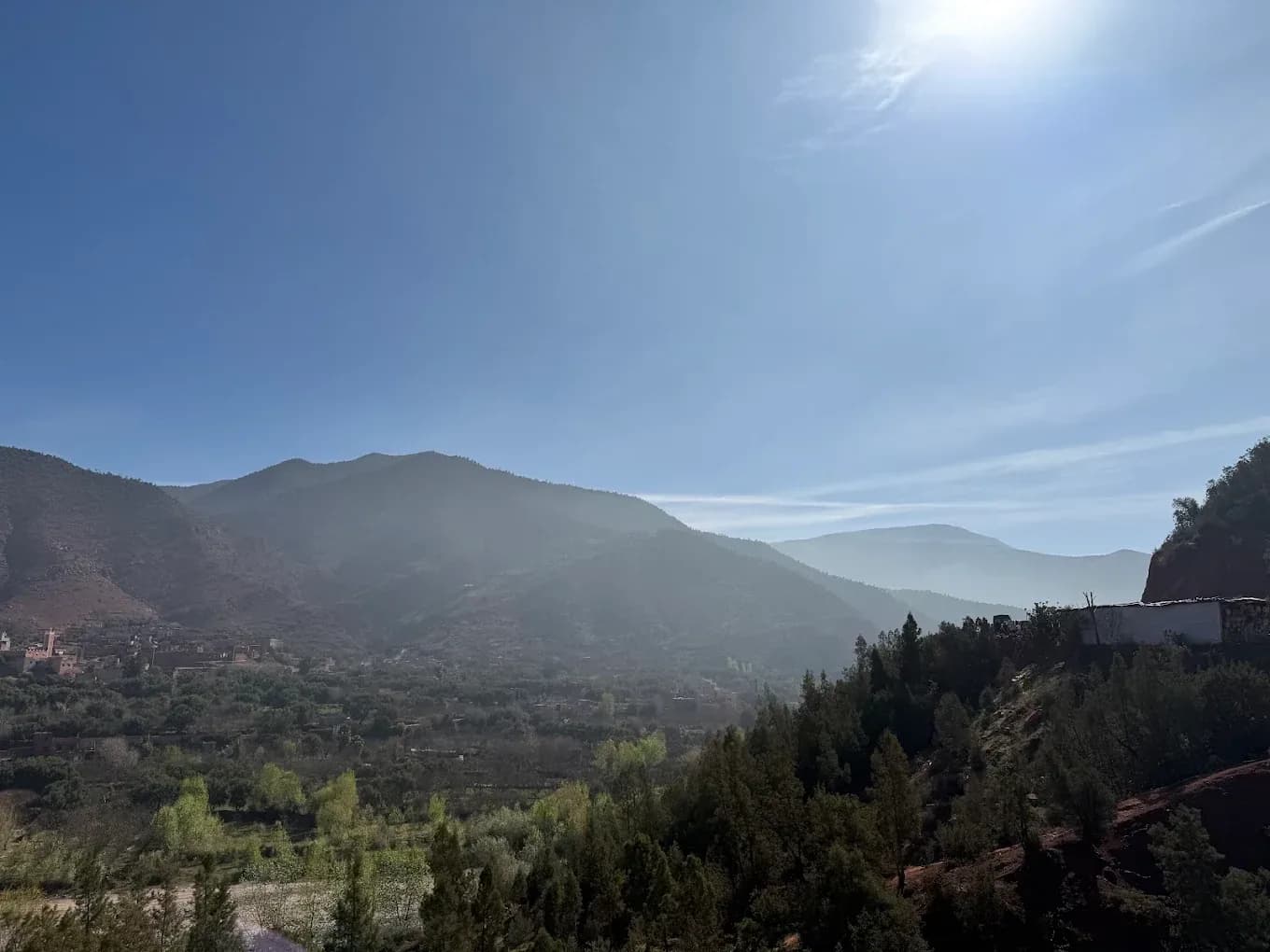
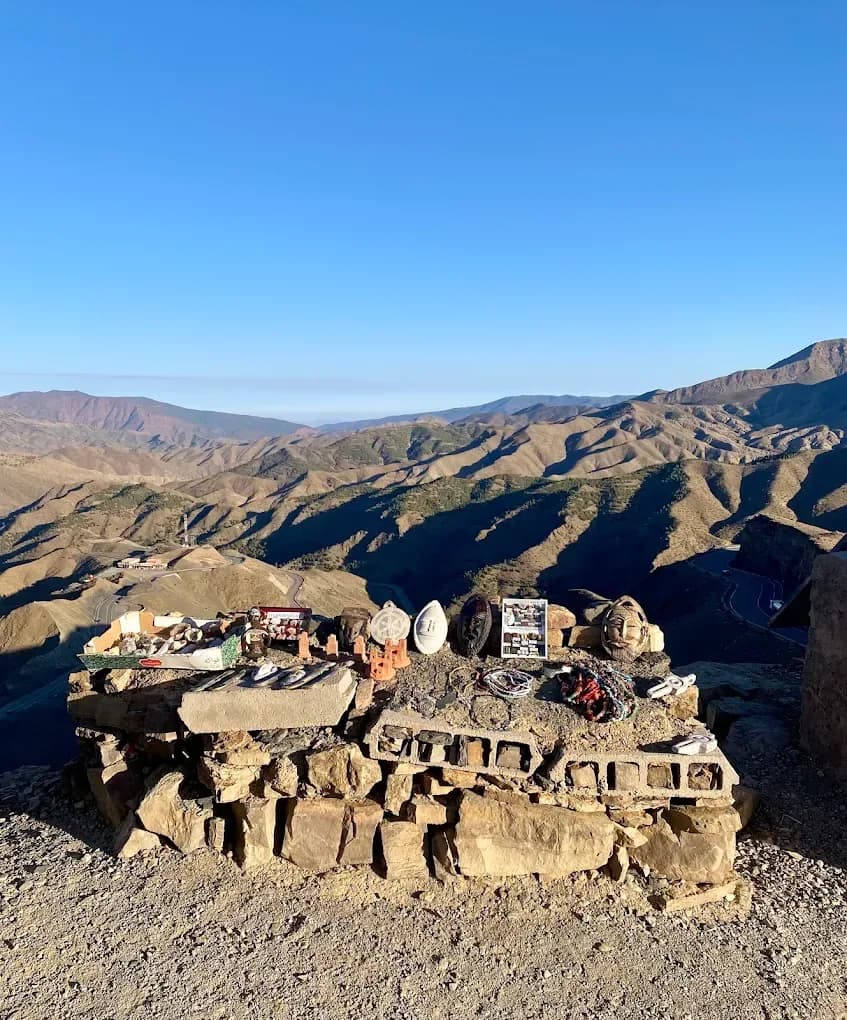
About 300-350 km and around 7 hours on the road with stops. We leave early for the High Atlas over the Tichka pass, which goes above 2,000 metres and has a lot of bends. If you get car sick, sit in the front and tell the driver; stopping is the most normal thing in the world on this road.
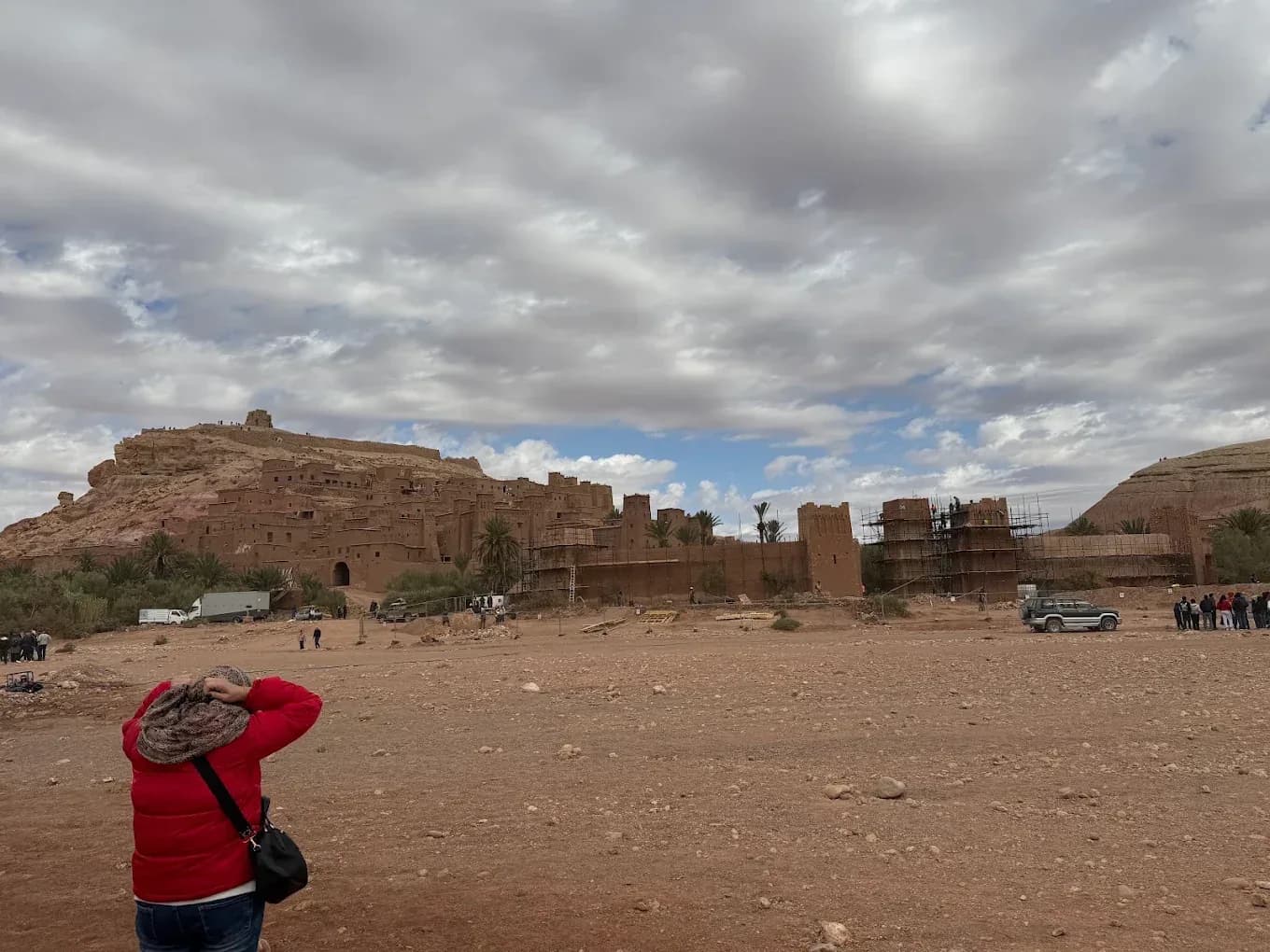
On the other side is Aït Ben Haddou, the mud-brick ksar listed as a UNESCO World Heritage Site and the setting for many films. You can visit it in an hour to an hour and a half, climbing up to the granary at the top. Then we pass through Ouarzazate and the Valley of Roses to the Dades Valley, where we sleep in a hotel with mountain views.
We prefer to sleep in the Dades rather than in Ouarzazate because the next day you reach the dunes earlier and the camel ride isn't rushed against the clock.
Day 4. Todra Gorge and arrival in Merzouga
About 5 or 6 hours on the road and about 300 km. In the morning we drive the bends of the Dades Gorges and continue to the Todra Gorge, a canyon with walls over 200 metres high where you walk beside the river for half an hour.
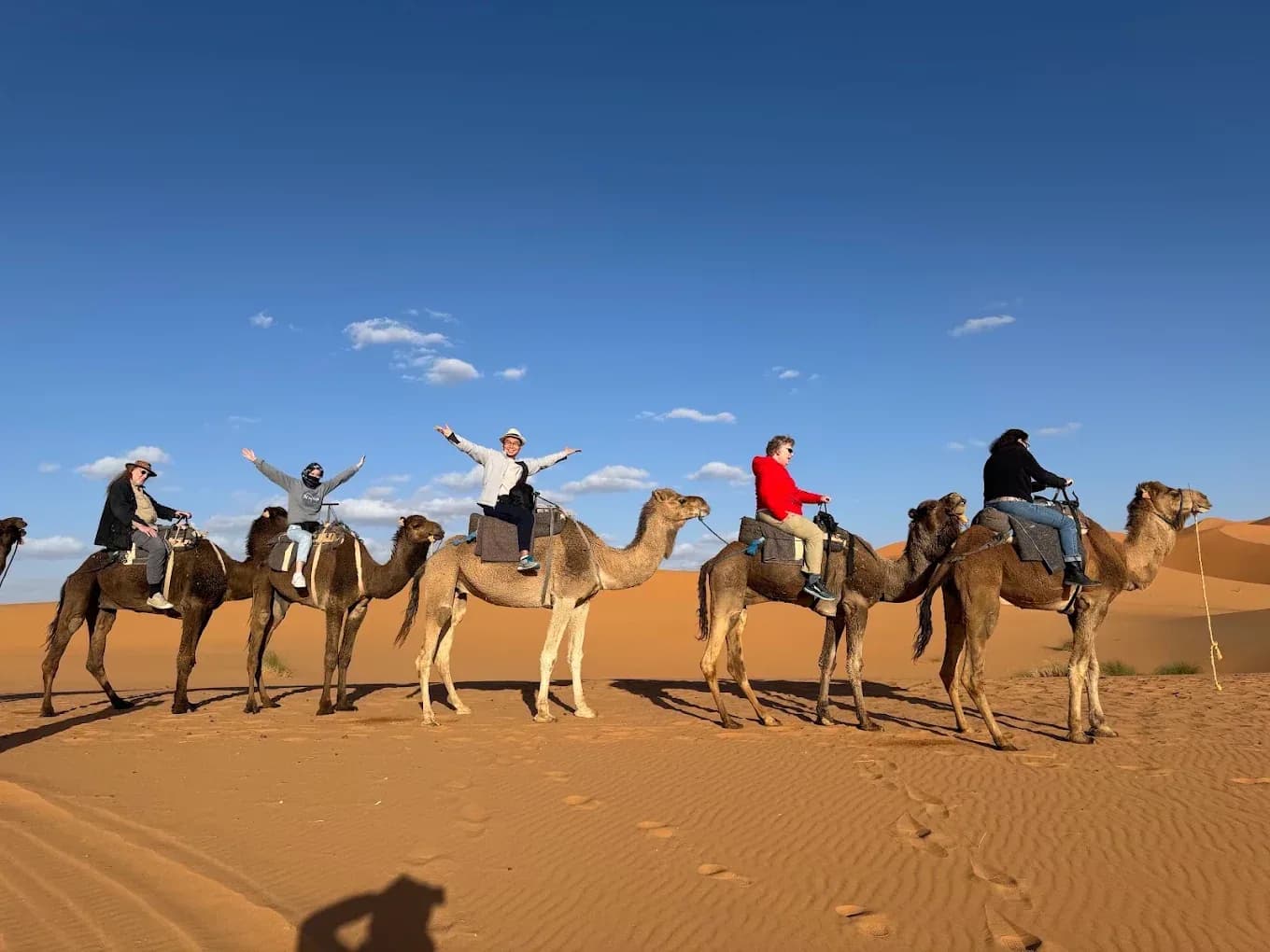
In the afternoon we reach Merzouga, at the foot of the Erg Chebbi dunes. You leave your big suitcase in the vehicle and set off by camel with a small backpack towards the camp. The ride takes about an hour and a half and is done in the light of sunset. Dinner, music by the fire and a night in the tent. If you are worried about what sleeping there is like, the cold or the toilets, read what it's like to sleep in the Moroccan desert.
Day 5. Merzouga, Ifrane and Fez
This is the longest day: about 450-480 km and around 8 hours with stops. Getting up early really pays off here, because sunrise over the dunes is one of the best moments of the trip. Afterwards you ride back by camel, have breakfast and we set off.
The road follows the Ziz Valley with its palm groves, climbs into the Middle Atlas via Midelt and crosses cedar forests where you often see Barbary macaques by the road. We pass through Ifrane, with its Alpine-style roofs, and reach Fez in the late afternoon. In winter this stretch can have snow, and the driver decides the departure time based on the forecast.
Day 6. Fez
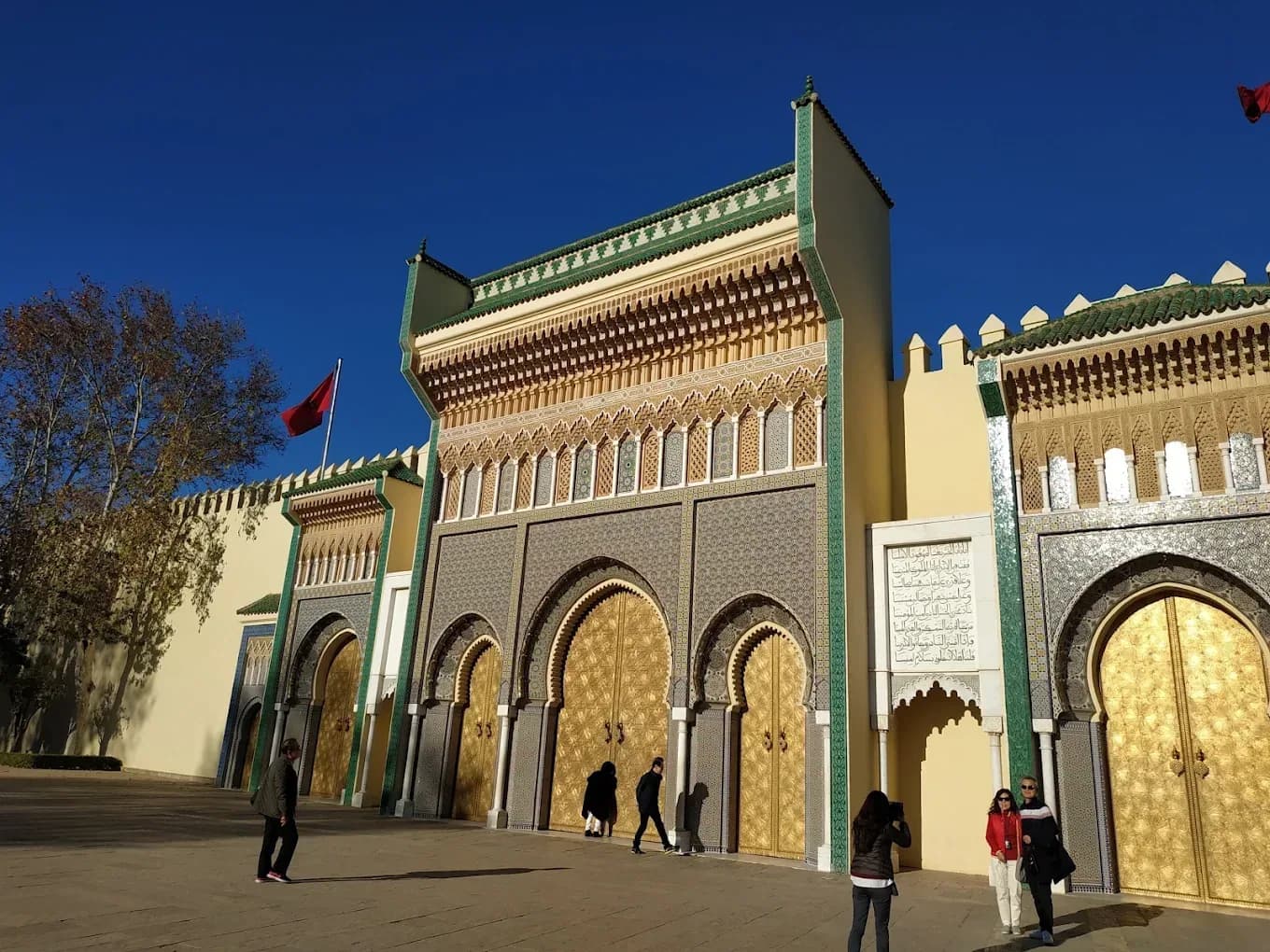
A full day in Morocco's oldest imperial city. Its medina, Fez el Bali, is a World Heritage Site and one of the largest pedestrian urban areas in the world. Here the official guide isn't optional for us: the medina has thousands of lanes and it is easy to lose half a day going round in circles.
In a visit of about 4 or 5 hours you see the Bou Inania or Al Attarine Madrasa, Seffarine square with its coppersmiths, the Chouara tanneries from the terraces of the leather shops and the gate of the University of Al Qarawiyyin, considered one of the oldest in the world. In the late afternoon, the views over the city from the Merenid Tombs. More details in what to see in Fez and in the Fez guide.
Day 7. Departure from Fez
Depending on your flight time, free time for last-minute shopping or, with an afternoon flight, a quick visit to Meknes or Volubilis. Transfer to the airport. If your flight leaves early, don't plan anything: the Fez medina first thing in the morning has its own atmosphere for a last coffee, and that is enough.
How the route changes depending on who is travelling
For a couple this itinerary works without changes. What we're asked for most is an upgrade to Superior in the desert, because the tents have a private bathroom and the difference shows.
If you are travelling alone, the private vehicle costs the same as for two people, so the price per person goes up. An alternative is the group trip from Fez to Marrakech via the desert, which follows a similar route sharing a vehicle with other travellers, and doing the cities on your own.
If you are short of time and only have five usable days, cut a night in each city rather than touching the desert route. The three driving days are what give the trip its point; removing one means driving for more than nine hours straight.
Version with children
With young children, three days of driving in a row and an eight-hour day are too much. When we organise family trips we swap the Merzouga dunes for the stony Agafay desert, less than an hour from Marrakech, and add mountains and the beach. It is the basis of our 7-day Morocco family trip.
The first two days are in Marrakech, with visits in the morning before the heat and the pool in the afternoon. On the third day we drive up to the Imlil valley, an hour and a half away, for an easy walk between villages; the youngest can ride a mule, always led by a muleteer. On the fourth day we go down to Agafay, about two hours away, for a camel ride at sunset and a night in a family tent. On the fifth day it is about two and a half hours to Essaouira, with its harbour of blue boats and its beach. The sixth day is free on the coast, and on the seventh we go back to Marrakech, again about two and a half hours, for the flight.
No day has more than three hours in the car. Agafay doesn't have big sand dunes, and that needs saying clearly, but a six-year-old doesn't care: what matters to them is the camel, the fire and the stars. If the children are a bit older and want real sand, compare the options in Merzouga or Zagora. There are more ideas in family trips.
Version without the desert
Some travellers don't want to spend three days on the road or already know the Sahara. For them we suggest a week through the imperial cities and the north, with shorter journeys and the train or motorway for much of the way.
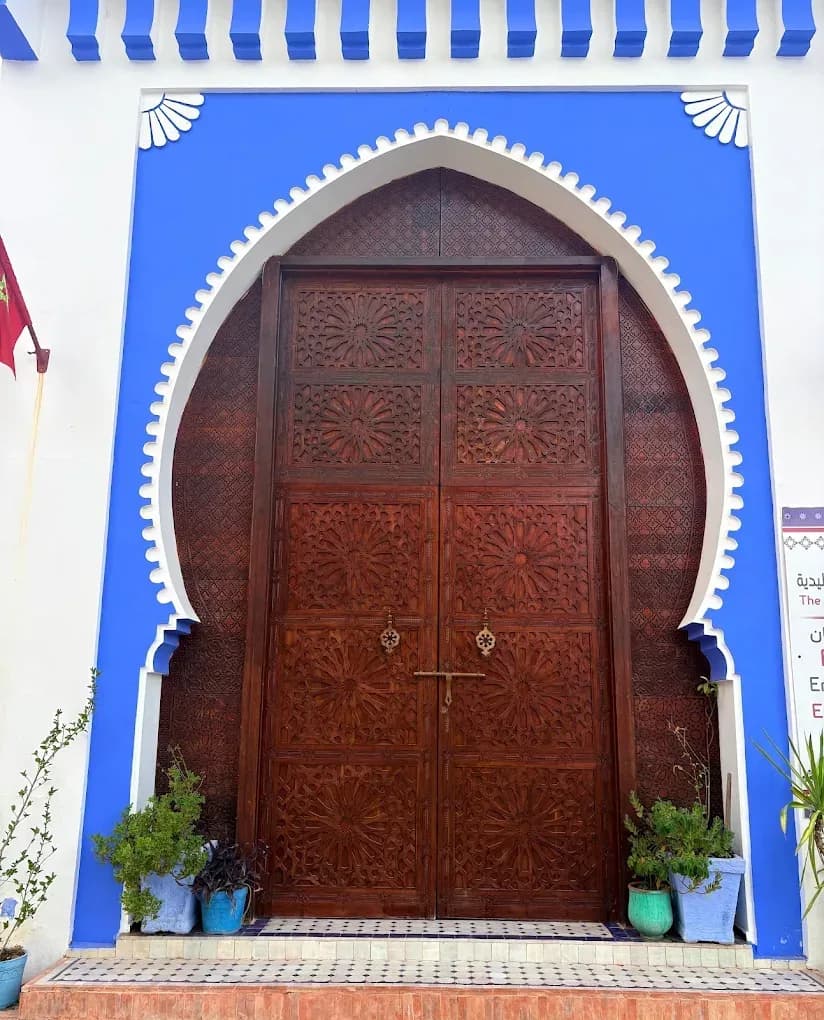
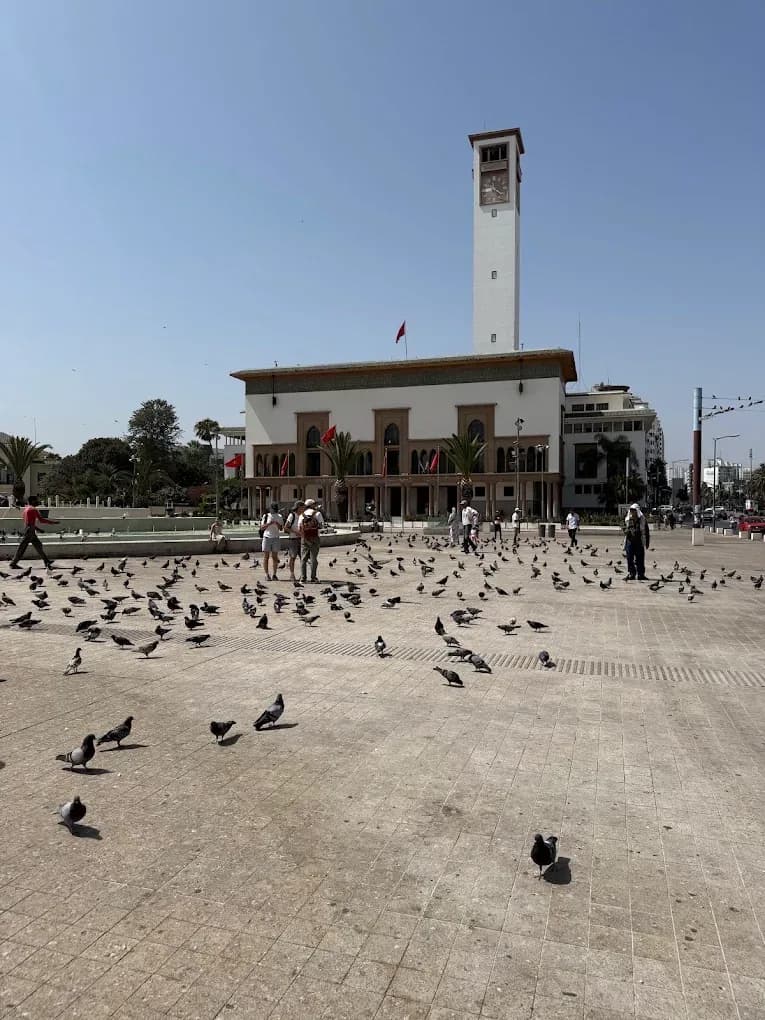
Days 1 and 2 are the same: Marrakech. On day 3 we take the motorway to Casablanca, about 3 hours, to see the Hassan II Mosque, and carry on to Rabat to sleep. On day 4 we leave for Meknes and Volubilis, the old Roman city, and reach Fez in the afternoon; from Rabat it is about 3 hours not counting the visits. Day 5 is for the Fez medina with a guide. On day 6 we drive up to Chefchaouen, the blue town of the Rif, three and a half to four hours on the road, with the last bends already in the mountains. On day 7 we go down to Tangier, about 2 hours away, to catch the flight or the ferry to Spain.
This version makes most sense if you arrive or leave via the Strait. To organise that part, see how to travel from Spain to Morocco. And if you have a day to spare and want the north with the desert included, our 8-day trip to Tangier, Chefchaouen, Fez and the desert puts it all together.
If you have a return flight to Marrakech
This happens a lot. In that case, days 1 and 2 are in Marrakech, from day 3 to 5 you do the desert route as a loop and on day 6 you go to Essaouira. The three desert days are exactly our 3-day trip to Merzouga from Marrakech. The warning is that the return from the dunes to Marrakech is the hardest day, 9 to 10 hours with stops.
The sixth day is for the day trip to Essaouira, about 3 hours by road through argan forests. If after so much driving you'd rather not come back the same day, sleep there and return to Marrakech on the seventh for your flight.
With one more day
With eight days, the main itinerary improves a lot. You can sleep a second night on the way to the desert or add Meknes, Volubilis and Rabat on the way back. That is what we do on the 8-day trip through the imperial cities and the desert from Marrakech, where the long day is spread out better and you reach Fez less tired.
Mistakes we see on one-week trips
Trying to fit the north, the desert and the coast into seven days. Every year someone asks us for Tangier, Chefchaouen, Merzouga and Essaouira in a week. You can draw it on a map, but it adds up to more than twenty hours of driving and leaves no time to walk around.
Booking the flight home first thing the day after the desert. If you drive back from Merzouga to Marrakech, you arrive at night. A seven o'clock flight leaves very little margin.
Taking your big suitcase to the camp. At most camps you arrive by camel, and the suitcase stays in the vehicle with the driver. A small backpack with what you need for one night is enough. We help you with the list in what to pack for Morocco.
Setting off without cash. In the villages along the way, at tea stops or at cooperatives, cards often aren't accepted. Carry dirhams for the three days on the road.
Going round the Fez medina without an official guide to save money. It can be done, but it is the city where you lose the most time and where you'll be offered the most unlicensed company. In Marrakech it is less necessary; in Fez we always recommend it.
Food and budget on the route
In seven days you'll eat tagine almost every day, and that gets tiring if you don't vary it. Order couscous on Friday, which is the traditional day, harira in the evening and pastilla if you see it on the menu. In the south, try the Berber pizza of Rissani, filled with meat and spices. There are more ideas in Moroccan food.
To work out how much to bring and how much you'll spend on entrance fees, meals and tips, we give rough figures in how much a trip to Morocco costs.
We design your week in Morocco
This itinerary is a starting point. We adapt it to your flights, the number of people, the children's ages and the level of accommodation you prefer, always with drivers and guides who speak Spanish. Write to us with your dates and we'll send you a proposal, or have a look at our private tours of Morocco.
Frequently asked questions
Is a week enough to see Morocco?
It is enough for the main sights if you choose well: two imperial cities and a night in the dunes, or cities and the coast. What doesn't fit is everything at once. People who try to add the north, the desert and the coast in seven days spend more hours in the car than in the places, which is why we prefer to leave something out for a second trip.
Is it better to start the trip in Marrakech or in Fez?
The flight almost always decides. Marrakech usually has more connections from Spain and Europe, so it is the most practical way in. What helps most is flying into one city and out of the other, so you don't repeat any road. If you can only find a return flight to Marrakech, the desert route can loop back to the starting point.
How many hours' drive is it between Marrakech and Merzouga?
It is about 550 to 600 kilometres, which by car means 9 to 10 hours of driving including stops. Nobody does it in one go by choice. The normal thing is to split it over two days, sleeping in the Dades Valley or in Ouarzazate, and use the journey to see Aït Ben Haddou and the Todra Gorge.
Can you do this itinerary by public transport?
Part of it, yes. The train links Marrakech with Fez and there are long-distance buses to the south, but the valleys, gorges and desert are poorly connected and you lose a lot of time waiting. That's why we recommend a private vehicle with a driver at least for the desert days, even if you do the rest on your own.